Understand the technologies of e-commerce 11 Power Point
amatoantonioSenza categoria 13 giugno 2019 0 Minutes
Understand the technologies of e-commerce 11
Unit 11 Delivering e-commerce solution REPORT
Intro:
This report provides information of understanding the new world of e-commerce and how all the retail have been revolutionized.
I will describe the impact of the e-commerce at the nowadays comparing the positive and negative aspect.
Nowadays the thought of living without e commerce seems unfathomable, complicated and an inconvenience to many. It wasn’t until only a few decades ago that the idea of e commerce had even appeared.
The history of e commerce started 40 years ago and, to this day, continues to grow with new technologies, innovations, and thousands of businesses entering the online market each year. Electronic Data Interchanges and teleshopping in the 1970 s paved the way for the modern day e commerce store. The history of e commerce is closely intertwined with the history of the internet. Online shopping only became possible when the internet was opened to the public in 1991. Amazon.com was one of the first e commerce sites in the US to start selling products online and thousands of businesses have followed since. The convenience, safety, and user experience of e commerce have improved exponentially since its inception. This article will address some of the key players and milestones of e commerce.
In the last twenty years, e-commerce has entirely revolutionized retail. It went from being an essentially non-existent business model to becoming a potential threat to the traditional mall as we know it. Jeff Bezos shipped Amazon’s first ever online book sale in 1995, and we consumers have never looked back. Data released last February by the U.S. Commerce Department indicates that Americans spent $304.91 billion online in 2014 alone.
When was online shopping invented?
Online shopping was invented and pioneered in 1979 by Michael Aldrich in the United Kingdom. He connected a modified domestic television via a telephone line to a real-time multi-user transaction processing computer. The system was marketed beginning in 1980 and offered mainly business-to-business systems that were sold in the UK, Ireland, and Spain. One the earliest consumer shopping experiences was Book Stacks Unlimited, an online bookstore created by Charles M. Stack in 1992. Stack’s store began as a dial-up bulletin board two years before Amazon was founded by Jeff Bezos. In 1994, Book Stacks Unlimited moved to the Internet as Books.com and was eventually acquired by Barnes & Noble.
Marketplaces Emerge
From the mid-nineties there were major advancements in the commercial use of the Internet. One of the first e commerce sites was Amazon which launched in 1995 as an online bookstore and has grown to be the largest online retailer in the world. Brick-and-mortar bookstores were limited to about 200,000 titles and Amazon, being an online only store, without physical limitations was able to offer exponentially more products to the shopper.
Amazon’s range now includes not only books but music and video downloads, electronics, apparel, furniture, food, and toys.
Amazon was one of the first online retailers to add user reviews with a rating scale to for products. Customer reviews are now considered the most effective social media tactic for driving sales.
Other e commerce marketplace success stories include Ebay, an online auction site that debuted in 1995 and Etsy, which launched in 2005 and by Q2 2018 saw gross merchandise sales total $901.7 million globally.
The late 1990s also saw new e commerce platform options for merchants. Miva’s first catalogue-based e commerce product was launched in 1997, achieving wide distribution in the late 1990s.
In 2005, Amazon announces the creation of Amazon Prime, a membership offering free two-day shipping within the contiguous United States on all eligible purchases for a flat annual fee. The membership quickly became popular, putting pressure on other merchants to offer fast and inexpensive shipping options. In 2016, Stamps.com acquires Shipping Easy for $50 million, after previously purchasing Ship Station and Ship Works in 2014.
Online Payments Evolve
Global e commerce company, PayPal, began its services in 1998 and currently operates in 202 markets. The company is an acquired bank that performs payment processing for online vendors, auction sites, and other commercial users. They allow their customers to send, receive and hold funds in 24 currencies worldwide. Currently, PayPal manages more than 244 million accounts, more than 100 million of them active.
As more and more people began doing business online, a need for secure communication and transactions became apparent. In 2004, the Payment Card Industry Security Standards Council (PCI) was formed to ensure businesses were meeting compliance with various security requirements.
The organization was created for the development, enhancement, storage, dissemination and implementation of security standards for account data protection.
In 2010, payments platform Square allowed small businesses to accept debit and credit cards on mobile devices. By Q4 2017, Square’s gross payment volume was $17.9 billion.
Mobile Expands
In 2001, Amazon.com launched its first mobile commerce site. Mobile commerce gained speed over the next two decades, as more users purchase from the palm of their hand. More than a third of U.S. e-commerce sales were made on a mobile device in 2017, according to eMarketer Inc. The research firm expects mobile sales to increase by a third in 2018 – reaching more than $200 billion – and estimates that by 2020 mobile sales will top 50%. Both consumers and business buyers turn to mobile devices for product research and coupons, with engagement through social media becoming increasingly popular. While business buyers expect consumer features such as a responsive design that travels from desktop to laptop to tablet to phone with consistent features, B2B shoppers demand an even stronger focus on finding products details, pricing, and help fast.
Amazon led the way by launching their mobile commerce site as early as 2001 and they continue to lead innovation in the eCommerce market now with drone delivery among other initiatives.
By accessing an online marketplace, consumers can find a range of product offerings that fit their search. They can compare prices, brands, read customer reviews, and often purchase products for prices below retail. At the same time, Google released Google Checkout in 2006 to help ease the payment process for eCommerce shoppers as they begin to shop online through multiple retailers.
In true modern-industry fashion, e-commerce hasn’t just grown exponentially. It has evolved and transformed over time to meet the ever changing whims and needs of the modern day consumer. In its early days, e-commerce was fairly limited. You saw something you liked and you bought it. Simple. Customization wasn’t an option. Today, not only can you customize a product online and have it made to order (take NikeIDs for example), but you can even design it yourself from scratch – and then sell it without having to lift a finger.
More recently,there have been a range of business model innovations focused on hardware and new services: Kindle e-readers, Fire Tablet, smartphone and TV, Echo (using the Alexa Artificial Intelligence voice-assistant), grocery delivery, Amazon Fashion and expansion to the business-oriented Amazon Web Services (AWS). Amazon Prime, an annual membership program that includes unlimited free shipping and then involved diversification to a media service with access to unlimited instant streaming of thousands of movies and TV episodes.Typically, eCommerce business models can be divided into six major types, such as:
- Business-to-Business (B2B) model focuses on providing products from one business to another. This niche are service providers, you’ll find software companies, office furniture and supply companies, document hosting companies.typically requires more start up cash
- Business-to-Consumer (B2C) sales are the traditional retail model, where a business sells to individuals, but business is conducted online as opposed to in a physical store
- Consumer-to-Consumer (C2C) Customer to customer (C2C) is a business model whereby customers can trade with each other, typically, in the online environment. Two implementations of C2Cmarkets are auctions and classified advertisements
- Consumer-to-Business (C2B) individual customers offer to sell products and services to companies who are prepared to purchase them
- Business-to-Administration (B2A) involve companies and public administration. This is an area that involves a large amount and a variety of services, particularly in areas such as fiscal, social security, employment, legal documents and registers, etc. These types of services have increased considerably in recent years with investments made in e-government.
The most impactful changes that have taken place in the eCommerce realm in the last 10 years, however, include:
- The rise of online marketplaces.
- The seamless shift to using mobile devices for online shopping.
- The tremendous growth of online and digital marketing and advertising.
- The practice using of digital modifications or enhancements to reality in sales and mainstream consumer shopping.
As eCommerce has evolved, online marketing has become seemingly limitless in its potential to reach and persuade consumers throughout their online behavior.
Difference between Traditional Commerce and E commerce
Traditional commerce:
Traditional commerce involves the exchange of goods and services between two people face to face. Like mentioned in the introduction, it is one of the oldest modes of buying products and services. It is done by almost everyone all over the globe. Just walking into a store or a marketplace, selecting an item and paying for the product.
Traditional Commerce is part of a business that involves all the activities that expedite business. The main two kinds of actions include trade and trading auxiliaries. Trading is, of course, the buying and selling of goods and services for money. Trading auxiliaries refer to business-related activities such as banking, transportation, insurance, packaging, marketing and advertisements, and more. Auxiliaries focus on helping to achieve successful business transactions between any two trading parties.
More on traditional commerce is that it includes all the activities that make straightforward goods and services exchange from the manufacturer to the consumers. Production of goods does not reach the consumer directly. Reasonably it passes various activities included in commerce. Traditional commerce depends on routine business operating hours during a specified period. It also requires occupying a retail store and housing inventory.
Business transactions mostly face to face interactions with customers. For new and repeat business, traditional commerce thrives on word of mouth, customer referrals, and networking. For business success, personal communication is, therefore, a key factor when relying on traditional commerce. Many businesses that trade their goods and services like this network within the society establish relationships with town leaders, chambers of commerce and also sponsor local sports teams and events to attract business and develop relationships within the community.
E commerce:
E commerce also electronic commerce is like traditional commerce. As such, it also involves the exchange of goods and services. The only difference is that it is conducted online via an electronic network – the Internet. Nowadays it has extended to online social networks. With e-commerce, transactions, assistance, and communication are done through the use of the electronic medium. All business activities including selling, ordering, purchasing, payments are performed over the internet. Technologies such as electronic data interchange, email, and electronic fund transfers are used for transactions and payments. E-commerce can be further categorized as follows:
Differences between Traditional Commerce and E-commerce
There are major differences between traditional and e-commerce. Below are some of the fundamental differences
Exchange of Traditional Commerce and E-Commerce :
Traditional commerce focuses on the exchange of products and services through personal interactions and is therefore manual while e-commerce trading activities are online via the internet and can be considered automatic
Timing of Traditional Commerce and E-Commerce :
Traditional commerce is limited to time business hours mostly during the day while e-commerce is 24/7, it can be done anytime day and night
Physical Interaction in Traditional Commerce and E-Commerce :
Traditional commerce allows a buyer to be physical inspect goods and test out services before making a purchase. Conversely, with e-commerce, products and services are not examined physically.
Face to Face :
As far as consumer interactions are concerned, traditional commerce provides face to face. On the other hand, e-commerce can be termed as screen to face interaction.
Geographical location:
Traditional commerce is limited to a particular geographical location while e-commerce is global and has no physical limitation.
Platform in Traditional Commerce and E-Commerce:
With traditional commerce, there’s no uniform platform for information exchange. Contrariwise, e-commerce has a unique uniform platform for exchanging information
Business relationship:
Business relationships with conventional commerce is linear while with e-commerce it is end to end.
Marketing in Traditional Commerce and E-Commerce:
When it comes to marketing, traditional commerce takes on a one-way marketing approach. E-commerce, on the other hand, takes on a one on one marketing strategy.
Payment involved in Traditional Commerce and E-Commerce:
Modes of payment in traditional commerce include cash, cheques, and credit cards. With e-commerce, there’s electronic funds transfer, credit card numbers and more.
Delivery:
Good and delivery of services is instant with traditional commerce while e-commerce delivery takes some time.
Establishment of Traditional Commerce and E-Commerce:
It is difficult to establish and maintain standard practices in traditional commerce. However, with e-commerce, uniform strategies can be quickly established and maintained
Conclusion:
| After careful oberservation, it has come to my conclusion that e-commerce has undeniably become an important part of our society. The world wide web is and will have a large part in our daily lives. It is therefore critical that small businesses have their own to keep in competition with the larger websites. Since web developers have lowered down the prices for their services, it has become more affordable for small businesses to use the world wide web to sell their products. Although there are negative aspects of e-commerce, small businesses have tried to accommodate to the needs of the consumers. For example, one of the negative aspects of e-commerce is that consumers lack the advice and guidance of sellers, to accommodate that, they have customer service through the phone of online to answer any questions. It is also important to note that e-commerce does not benefit all small companies equally. How much revenue a business gets from e-commerce depends on what kind of service it gives. For example, most people would like to try on clothes before they buy them, so it probably would not benefit a small business that sells clothes as much as a small business that sells home supplies or specialty books. Nevertheless, e-commerce does benefit any business even in small ways. This is why it is crucial to understand how e-commerce affects small businesses because it is becoming such a huge part of how society functions that it effects the economy greatly and whatever happens to the economy affects us. This is why is it important to understand this subject because in the long run, it will affect all of us. |
Read more: Difference between Traditional Commerce and Ecommerce | Difference Between | Difference between Traditional Commerce vs Ecommerce http://www.differencebetween.net/business/difference-between-traditional-commerce-and-ecommerce/#ixzz5inzN0LFF
Read more: Difference between Traditional Commerce and Ecommerce | Difference Between | Difference between Traditional Commerce vs Ecommerce http://www.differencebetween.net/business/difference-between-traditional-commerce-and-ecommerce/#ixzz5inzG5If8Read more: Difference between Traditional Commerce and Ecommerce | Difference Between | Difference between Traditional Commerce vs Ecommerce http://www.differencebetween.net/business/difference-between-traditional-commerce-and-ecommerce/#ixzz5inypA9OKRead more: Difference between Traditional Commerce and Ecommerce | Difference Between | Difference between Traditional Commerce vs Ecommerce http://www.differencebetween.net/business/difference-between-traditional-commerce-and-ecommerce/#ixzz5inyXdBkB
https://www.ocf.berkeley.edu/~atgeno/conclusion
https://www.forbes.com/sites/steveolenski/2015/12/29/the-evolution-of-ecommerce/
https://www.augment.com/blog/evolution-ecommerce-last-decade/
https://www.miva.com/blog/the-history-of-ecommerce-how-did-it-all-begin/amatoantonioSenza categoriaLascia un commento13 giugno 2019 10 Minutes
Global Warming
In a 2008 NASA article on usage, Erik M. Conway defined global warming as “the increase in Earth’s average surface temperature due to rising levels of greenhouse gases”, while climate change was “a long-term change in the Earth’s climate, or of a region on Earth


amatoantonioSenza categoriaLascia un commento14 marzo 2019 0 Minutes
Cycling Could Help Save The Planet

According to a globally-significant report published earlier today one of the ways of saving our world will be for more of us to cycle more frequently. If we want to prevent “rapid, far-reaching and unprecedented changes in all aspects of society” we have to keep the global temperature rise to under 1.5°C, the world’s leading climate scientists agreed in the report. After a week of haggling between scientists and government officials at a meeting in South Korea, the Intergovernmental Panel on Climate Change (IPCC) issued its hard-hitting report on the impact of global warming.

There are many mitigating tactics, what the report calls “pathways,” we will all need to take if we want our planet to remain habitable, and among them are walking and cycling more. The stakes could not be higher. The risks, says the IPCC report, include “high levels of public unrest and political destabilization due to the increasing climatic pressures, resulting in some countries becoming dysfunctional.”


Professor Jim Skea, who co-chairs the IPCC, stressed that policymakers have to grasp, and quickly, the “unprecedented nature of the changes that are required if we are to limit warming to 1.5°C.”
The professor of Sustainable Energy at London’s Imperial College added that this means major “changes to energy systems, changes to the way we manage land, [and] changes to the way we move around with transportation.”
Beyond getting green, people choose to ride bicycles for many different reasons—it could be to save money on the commute to work, for fitness (instead of driving to the gym to use an electric stationary bike), or to visit a friend in the neighborhood. Regardless, the choice favorably impacts the environment several ways, in addition to reducing CO2 global warming.
Riding a bicycle will:

1. Reduce carbon emissions – According to the Environmental Protection Agency, a car driving an average of 12,500 miles per year will expend 11,450 pounds of carbon dioxide. That’s nearly one pound of carbon dioxide, the greenhouse gas responsible for CO2 global warming, for every mile driven. If you choose to ride your bike to work just one day a week, you can reduce your contribution to CO2 global warming by 20% annually.
2. Reduce America’s dependence on fossil fuels – Every gallon of gas you put into your car comes out of the ground. Recent events, including political unrest in oil-rich countries and the environmental disaster in the Gulf of Mexico, show the high cost we pay for this dependence. If you use bicycling as one of your ways of getting green, you’ll minimize your own dependence.
3. Decrease the need for more roadways – While you may not be ready to trade in your car, every day you stay off the roadway reduces the need for your space. If others also choose to bicycle some days, cumulatively there is less need for our ever expanding highway system. That means more trees, more open space, and less resources needed to build the roads.
4. Reduce landfill waste – One of the encouraging green facts is that 75% of the parts of a car are recyclable, but Argonne National Labs estimates there are still at least 3 million tons of non-recyclable shredder residue head to landfills each year. If you bicycle more, you will create less wear and tear on your car, which means you can keep it on the road (or in your garage when you’re biking) longer and reduce your contribution to the landfill.
5. Improve air quality – The Environmental Protection Agency, a great source for green facts, reports that transportation accounts for 33% of CO2 emissions in America, with more than half of that coming from cars. Bicycling is a zero emissions way to get from place to place; as a cyclist, you will definitely appreciate clean air.
6. Reduce cold start emissions – Cars are most inefficient when started and for the first few miles of driving. If cycling all the way to your destination is prohibitive due to the distance, cycling part way and then taking mass transit may be possible. By skipping the short drive altogether, you will reduce your impact on CO2 global warming.
7. Protect wildlife – According to the US Fish and Wildlife Service estimates, 60 million birds are killed each year in collisions with cars. Reduce the miles you drive each week, and you’ll reduce your negative impact on birds and other wildlife.
Wicked problems have no easy solutions in that they are beyond the capacity of any one organization to solve, and there is disagreement among organizations about both the causes and the best means by which to solve the problem . Managing wicked problems requires working successfully within and across organizational boundaries, engaging citizens and other stakeholders in policy-making and implementation of those policies, and ultimately changing the behavior of groups of citizens or all citizens
amatoantonioSenza categoriaLascia un commento14 marzo 2019 3 Minutes
Typography









amatoantonioSenza categoriaLascia un commento14 marzo 2019 0 Minutes
Understand the e-commerce environment
1.1 Describe e-commerce activities used by businesses
Generally speaking, when we think of e-commerce, we think of an online commercial transaction between a supplier and a client. However, and although this idea is right, we can be more specific and actually divide e-commerce into six major types, all with different characteristics.
There are 6 basic types of e-commerce:
- Business-to-Business (B2B)
- Business-to-Consumer (B2C)
- Consumer-to-Consumer (C2C)
- Consumer-to-Business (C2B).
- Business-to-Administration (B2A)
- Consumer-to-Administration (C2A)
1. Business-to-Business (B2B)
Business-to-Business (B2B) e-commerce encompasses all electronic transactions of goods or services conducted between companies. Producers and traditional commerce wholesalers typically operate with this type of electronic commerce.
2. Business-to-Consumer (B2C)
The Business-to-Consumer type of e-commerce is distinguished by the establishment of electronic business relationships between businesses and final consumers. It corresponds to the retail section of e-commerce, where traditional retail trade normally operates.
These types of relationships can be easier and more dynamic, but also more sporadic or discontinued. This type of commerce has developed greatly, due to the advent of the web, and there are already many virtual stores and malls on the Internet, which sell all kinds of consumer goods, such as computers, software, books, shoes, cars, food, financial products, digital publications, etc.
When compared to buying retail in traditional commerce, the consumer usually has more information available in terms of informative content and there is also a widespread idea that you’ll be buying cheaper, without jeopardizing an equally personalized customer service, as well as ensuring quick processing and delivery of your order.
3. Consumer-to-Consumer (C2C)
Consumer-to-Consumer (C2C) type e-commerce encompasses all electronic transactions of goods or services conducted between consumers. Generally, these transactions are conducted through a third party, which provides the online platform where the transactions are actually carried out.
4. Consumer-to-Business (C2B)
In C2B there is a complete reversal of the traditional sense of exchanging goods. This type of e-commerce is very common in crowdsourcing based projects. A large number of individuals make their services or products available for purchase for companies seeking precisely these types of services or products.
Examples of such practices are the sites where designers present several proposals for a company logo and where only one of them is selected and effectively purchased. Another platform that is very common in this type of commerce are the markets that sell royalty-free photographs, images, media and design elements, such as iStockphoto.
5. Business-to-Administration (B2A)
This part of e-commerce encompasses all transactions conducted online between companies and public administration. This is an area that involves a large amount and a variety of services, particularly in areas such as fiscal, social security, employment, legal documents and registers, etc. These types of services have increased considerably in recent years with investments made in e-government.
6. Consumer-to-Administration (C2A)
The Consumer-to-Administration model encompasses all electronic transactions conducted between individuals and public administration.
Examples of applications include:
- Education – disseminating information, distance learning, etc.
- Social Security – through the distribution of information, making payments, etc.
- Taxes – filing tax returns, payments, etc.
- Health – appointments, information about illnesses, payment of health services, etc.
Both models involving Public Administration (B2A and C2A) are strongly associated to the idea of efficiency and easy usability of the services provided to citizens by the government, with the support of information and communication technologies.
Advantages of e-commerce
The main advantage of e-commerce is its ability to reach a global market, without necessarily implying a large financial investment. The limits of this type of commerce are not defined geographically, which allows consumers to make a global choice, obtain the necessary information and compare offers from all potential suppliers, regardless of their locations.
By allowing direct interaction with the final consumer, e-commerce shortens the product distribution chain, sometimes even eliminating it completely. This way, a direct channel between the producer or service provider and the final user is created, enabling them to offer products and services that suit the individual preferences of the target market.
E-commerce allows suppliers to be closer to their customers, resulting in increased productivity and competitiveness for companies; as a result, the consumer is benefited with an improvement in quality service, resulting in greater proximity, as well as a more efficient pre and post-sales support. With these new forms of electronic commerce, consumers now have virtual stores that are open 24 hours a day.
Cost reduction is another very important advantage normally associated with electronic commerce. The more trivial a particular business process is, the greater the likelihood of its success, resulting in a significant reduction of transaction costs and, of course, of the prices charged to customers.
Disadvantages of e-commerce
The main disadvantages associated with e-commerce are the following:
- Strong dependence on information and communication technologies (ICT);
- Lack of legislation that adequately regulates the new e-commerce activities, both nationally and internationally;
- Market culture is averse to electronic commerce (customers cannot touch or try the products);
- The users’ loss of privacy, the loss of regions’ and countries’ cultural and economic identity;
- Insecurity in the conduct of online business transactions.
B2B Ecommerce
A B2B model focuses on providing products from one business to another. While many ecommerce businesses in this niche are service providers, you’ll find software companies, office furniture and supply companies, document hosting companies, and numerous other ecommerce business models under this heading.
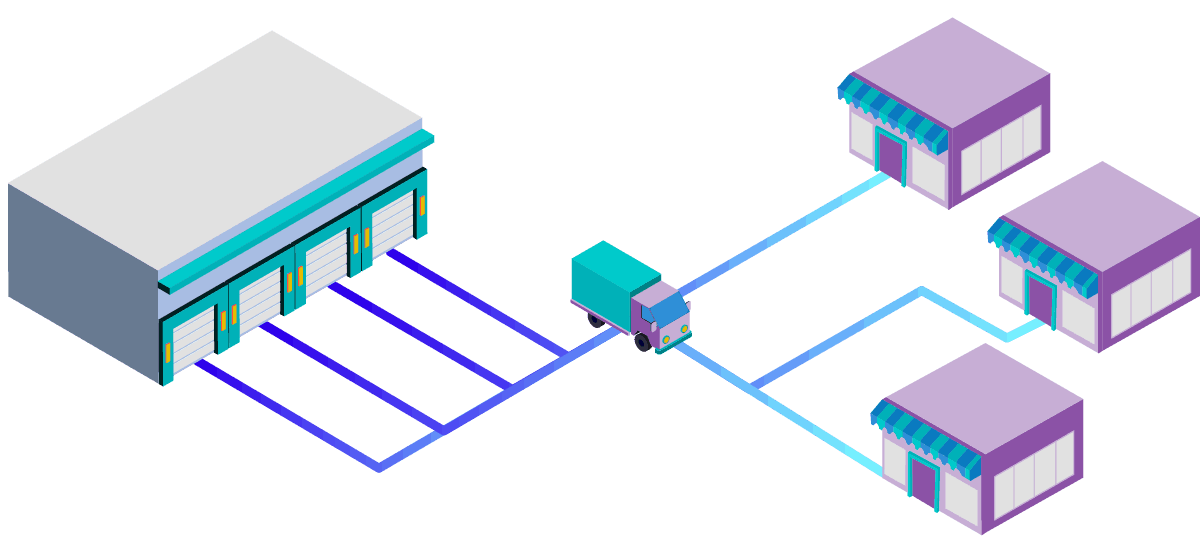
B2B ecommerce examples you may be familiar with include the ExxonMobil Corporation and the Chevron Corporation, Boeing, and Archer Daniel Midlands. These businesses have custom, enterprise ecommerce platforms that work directly with other businesses in a closed environment. A B2B ecommerce business typically requires more startup cash.
B2C Ecommerce
The B2C sector is what most people think of when they imagine an ecommerce business. This is the deepest ecommerce market, and many of the names you’ll see here are known quantities offline, too. B2C sales are the traditional retail model, where a business sells to individuals, but business is conducted online as opposed to in a physical store.
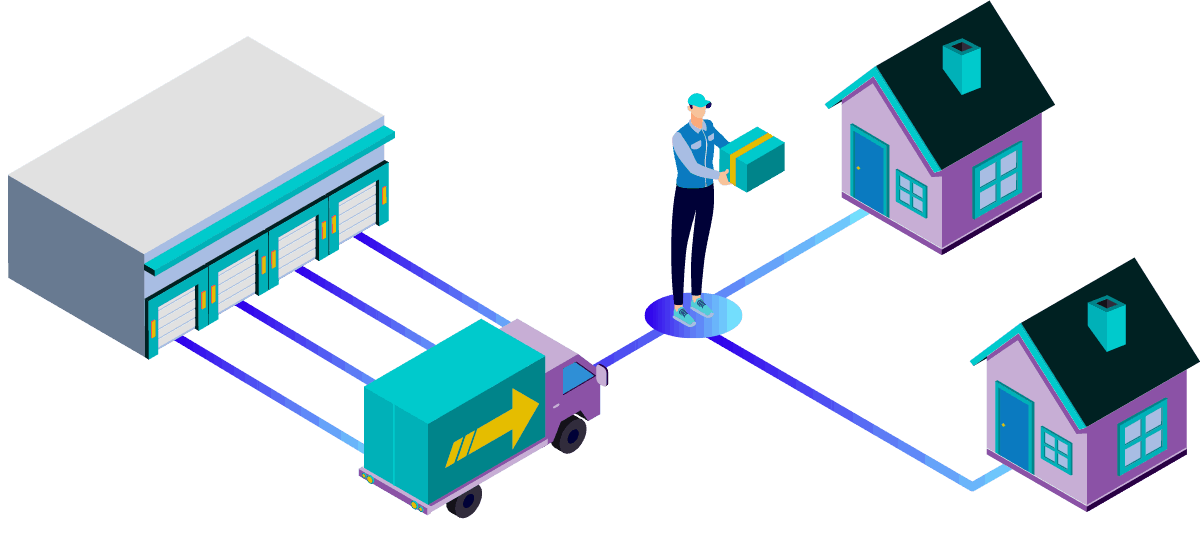
Examples of B2C businesses are everywhere. Exclusively online retailers include Newegg.com, Overstock.com, Wish, and ModCloth, but other major B2C brick-and-mortar businesses like Staples, Wal-Mart, Target, REI, and Gap.
C2C Ecommerce
B2B and B2C are fairly intuitive concepts for most of us, but the idea of C2C is different. What does a consumer-to-consumer ecommerce business look like?
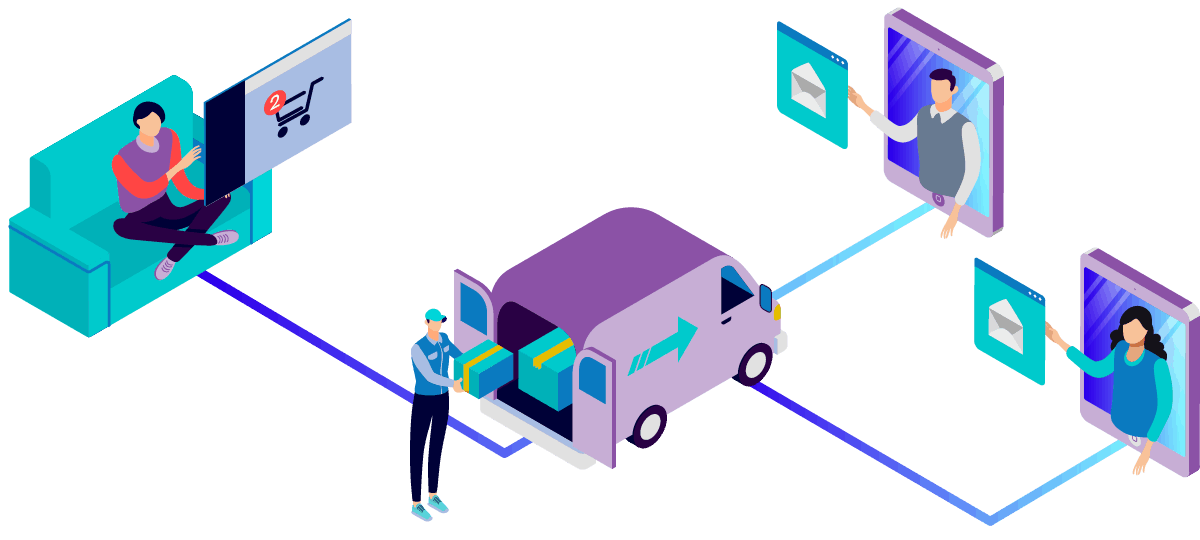
Created by the rise of the ecommerce sector and growing consumer confidence in online sales, these sites allow customers to trade, buy, and sell items in exchange for a small commission paid to the site. Opening a C2C site takes careful planning.
Despite the obvious success of platforms like eBay and Craigslist, numerous other auction and classified sites (the main arenas for C2C) have opened and quickly closed due to unsustainable models.
C2B Ecommerce
C2B is another model most people don’t immediately think of, but that is growing in prevalence. This type of online commerce business is when the consumer sells goods or services to businesses, and is roughly equivalent to a sole proprietorship serving a larger business.
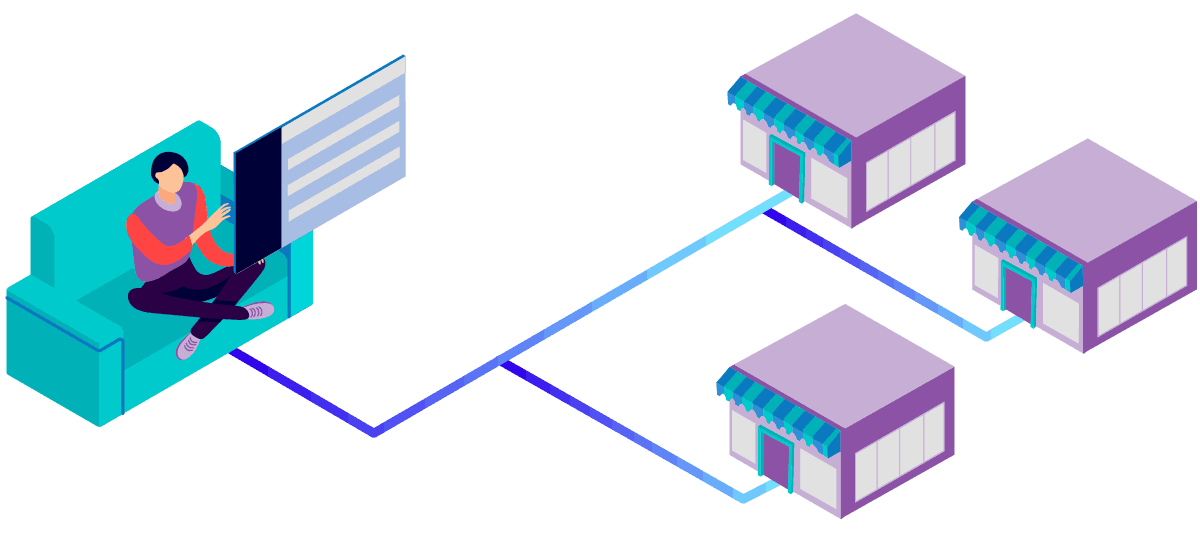
Reverse auctions, service provision sites like UpWork, and several common blog monetization strategies like affiliate marketing or Google AdSense also fall under this heading.
Government / Public Administration Ecommerce
The models listed above are the primary ecommerce retail structures, but they aren’t the only ones. Other types of ecommerce involve government/public administration conducting ecommerce transactions with businesses or consumers.
- B2G (also called B2A), for businesses whose sole clients are governments or type of public administration. One example is Synergetics Inc. in Ft. Collins, Colorado, which provides contractors and services for government agencies.
- C2G (also called C2A): typically individuals paying the government for taxes or tuition to universities.
Two sectors that are closed for entrepreneur owners but are growing include G2B for government sales to private businesses, and G2C, for government sales to the general public.
Types Of Ecommerce Business Revenue Models
The next most important thing to think about is how you want to handle inventory management and sourcing products. Some people like the idea of making their own products and others hate the idea of their garage full of boxes.
Drop Shipping
The simplest form of ecommerce, drop shipping lets you set up a storefront and take the customers’ money. The rest is up to your supplier. This frees you from managing inventory, warehousing stock, or dealing with packaging, but there’s a major caveat.
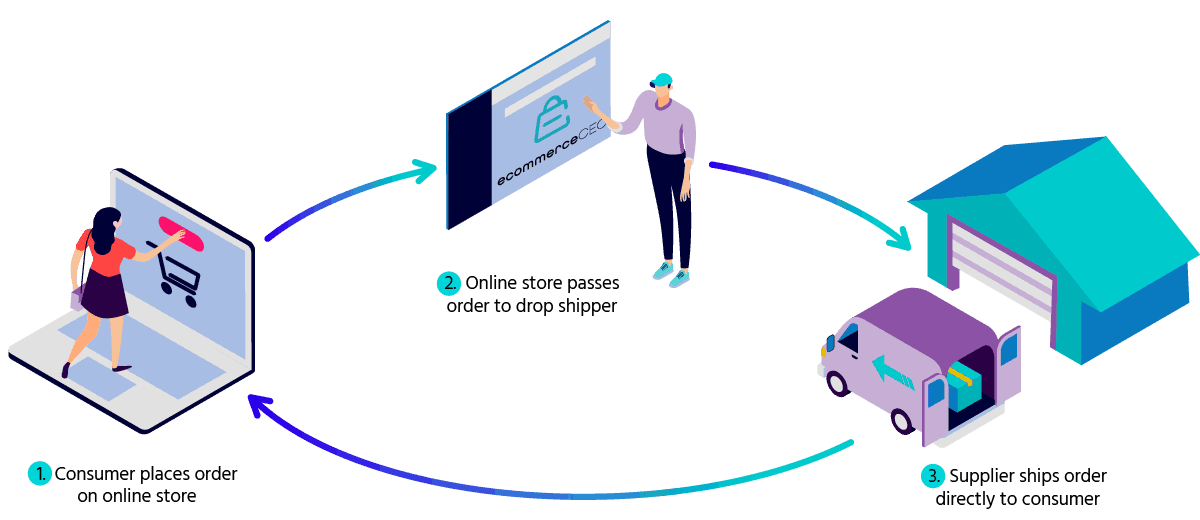
If your sellers are slow, product quality is lower than expected, or there are problems with the order, it’s on your head (and in your reviews). Wacky Hippo is an example of an ecommerce site using drop shipping. I wouldnt base my business on dropshipping – and I totally agree with this article.
If you are dead set on dropshipping – print on demand is the way to go.
DROPSHIPPING ECOMMERCE SOFTWARE
Many dropshippers use Shopify and Oberlo. Its quick and inexpensive to set up. A popular model is to set up a quick store and drive traffic with Facebook Ads. Margins are thin and if you can squeeze out some profit here, more power to you. I’m holding off on drop shipping for now.

Wholesaling and Warehousing
Wholesaling and warehousing ecommerce businesses require a lot of investment at the start – you need to manage inventory and stock, keep track of customer orders and shipping information, and invest in the warehouse space itself.
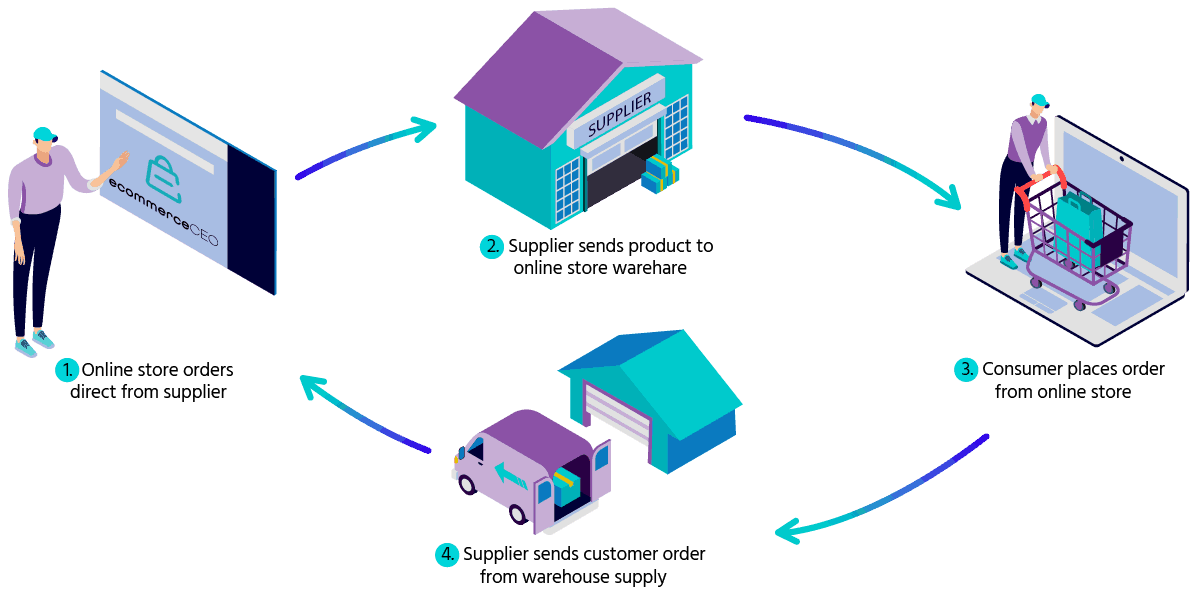
DollarDays is an online wholesaler with a massive product catalog that includes more than 260,000 products. They employ a key strategy for retailers in this space – by offering case prices AND piece prices, they can sell to the general public and to retailers. This gives them a higher profit margin than a strictly wholesale model.
ECOMMERCE SOLUTIONS FOR WHOLESALERS
Wholesale businesses are all about volume. You’ll need to push products out to Ebay, Amazon, Google, etc. BigCommerce includes all this in their Basic plan for $29 month. No tinkering needed. If you have dev skills, you can use X-Cart.

Private Labeling and Manufacturing
If you’ve got an idea for the perfect product, but don’t have the cash or desire to build your own factory, this might be the right ecommerce business model for you. Companies that manufacture products offsite for sale send the plans or prototypes to a contracted manufacturer who produces the product to meet customer specifications and can either ship directly to the consumer, to a third party such as Amazon, or to the company selling the final product.
On-demand manufacturing allows you to quickly change suppliers if you encounter problems with product quality. The startup costs are minimal, and if you’re interested in potentially opening your own production facilities later, this is a good way to test a new product or concept.
If you have a product idea and need to find a manufacturer, Try Sourcify.
- The Complete Guide To Finding The Best Private Label Manufacturers
- 29 Private Label Product Ideas to Kickstart a $100K+ Brand
White Labeling
White labeling is similar. You choose a product that is already successfully sold by another company, but offers white label options, design your package and label, and sell the product. This is common in the beauty and wellness industries, but more difficult to encounter in other niches.
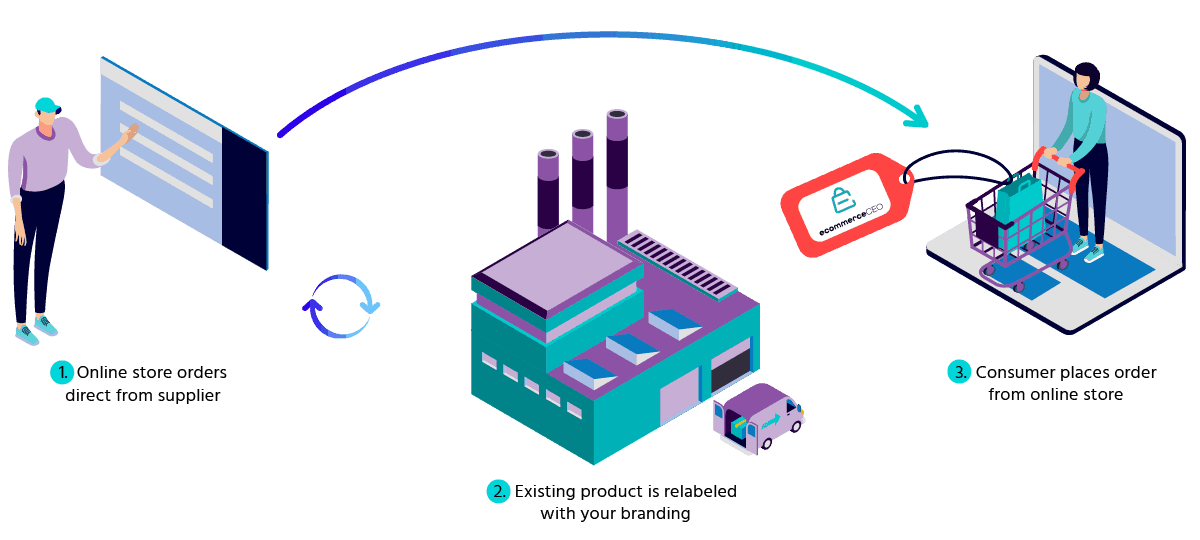
One problem with white labeling is demand. You’re stuck with whatever you order, and most of these companies set a minimum production quantity. If you can’t sell it, you’ll have to live with it. Consider this option when you’re willing to work full time on your business and know your product is in demand.
ECOMMERCE SOLUTIONS FOR BRANDS
If you have your own line of branded products and need to get traction, BigCommerce is a good option to start. Their pricing model can get expensive when you start to make significant sales ($150K+ per year).
Subscription Ecommerce
One of the most popular and successful pure ecommerce brands is the Dollar Shave Club. Other examples of subscription services include Stitch Fix, Blue Apron, and Nature Box. On the local level, community-supported agriculture boxes are popular.
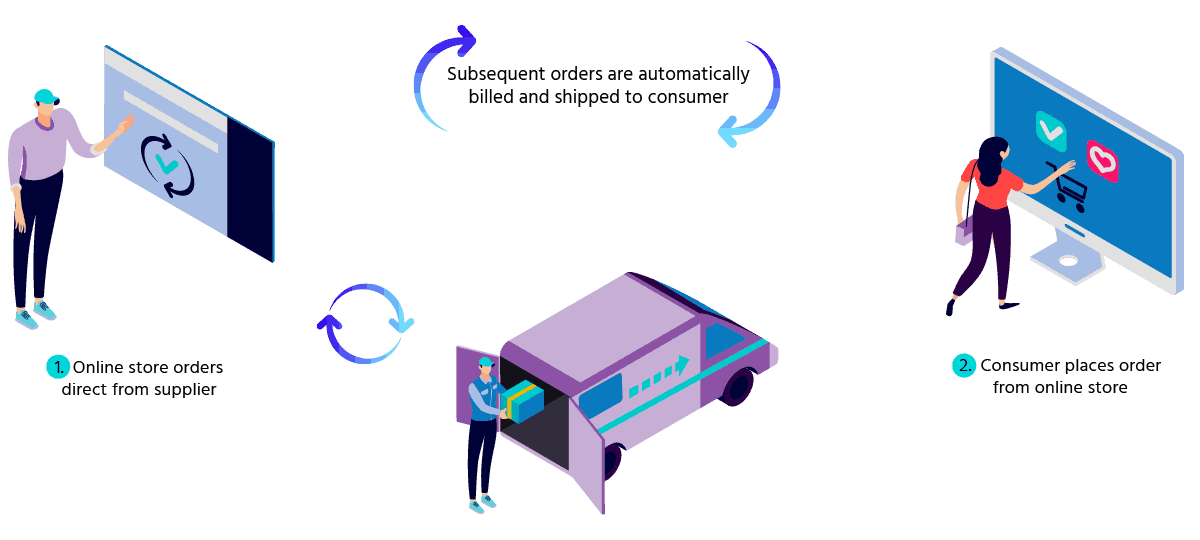
These ecommerce companies rely on a subscription model that delivers customers a box of products at regular, scheduled intervals. Subscription companies have relatively reliable income streams and can easily incentivize customers to purchase additional subscriptions or encourage their contacts to subscribe.
Picking the right products and niches can be difficult. Successful subscription boxes tend to fall into a small handful of product categories: health and grooming, beauty, fashion, and food. Outside of these areas, few subscription companies thrive.
RECURRING BILLING ECOMMERCE SOFTWARE
I love the idea of a subscription based ecommerce business. Both Shopify and BigCommerce need additional, paid apps for subscription based ecommerce. So you’ll need something like WooCommerce Subscriptions (WordPress) or X-Cart to handle this.

Product Revenue Models
Once you’ve identified who you are selling to and where, you need to think about what you want to sell. Some businesses sell a single white-label product, while others offer a full selection of niche-specific products. Yet another model depends on affiliate programs across a wide swath of categories. Before opening your store, you need to decide the type and number of products. Depending on your niche, you may also need to evaluate production practices and regulations regarding what you can and can’t say (organic, for instance). But first, what IS ecommerce?
What Counts For Ecommerce
Ecommerce is a broad term, but the simplest way to define it is the exchange of services, and products online. Affiliate, physical, and digital products all fall under this purview, as do services of all kinds that involve an exchange of funds online. Our focus is on product-based businesses, so I’ll describe a few of the top models for you here. I’ll provide a few examples, so you can see what they look like in use, too.
Single Product Model

Single-product ecommerce businesses focus on a single product, potentially in varying levels, offered to businesses or consumers. One example is Nvivo, a software package made by QSR international. QSR’s only product is the Nvivo software package, although the company also offers trainings and supplemental materials for purchase by users.
This is a good model if you know you have a solid product with high demand and limited competition. Otherwise, tread carefully. Remember the adage about putting all your eggs in one basket…
Single Category

When you want to test the waters in an ecommerce niche, a single category site can be a smart choice. By offering a small selection of carefully chosen products, you can build your reputation and credibility without overspending. Several retailers started with a model like this, and many continue to use it today.
Keep in mind that you can always make subcategories – take books, for example. If you open a bookstore, your category is books. But what kind? Textbooks? Ok. What area? Defining single category ecommerce is challenging when you really start to think about it. Avoid overdoing it, and stay focused. The key to success with a site like this is to focus on a specific customer avatar and their interests, then pull a subset of those interests that seems most likely to turn a profit.
Examples of ecommerce sites in this arena include Mangelsen Nature Photography, Flowers.com, and The White T-Shirt Company.
This is a smart model for new business owners, and requires minimal effort and investment to manage. The main drawback is that you’re only likely to catch the interest of a very small portion of ecommerce shoppers.
Multiple Category

Multiple category ecommerce sites are a good choice for established brick and mortar stores. Retailers who have tried a single category site successfully and are ready to expand their offerings might be ready for multiple category sites, too.
Product selection is one of the most difficult parts of managing this type of site. One bad product can ruin your reputation, and if you are sourcing from multiple suppliers, the larger your store is, the more difficult logistics become. Examples of multiple category ecommerce stores include Target, Cultures for Health, and REI.
Affiliate
Amazon.com, DoTerra Essential Oils, and dozens of other companies are boosting their sales with the help of affiliates. Often through blogs, but sometimes through dedicated ecommerce stores, affiliate sales benefit the original seller by providing additional visibility and the affiliate by providing an opportunity to monetize product reviews, a personal blog, or other site.
Most affiliate sites aren’t big money makers, but they can provide an additional income stream for sites that predominantly rely on other income streams. If you’re interested in affiliate sales and ecommerce, JVZoo is a good place to connect with vendors and other affiliates.
Hybrid [Single Category + Affiliate]
For businesses that have outgrown the income stream or the product confines of a single category store, becoming a single category and affiliate hybrid store can be beneficial. You can test related product categories in your niche, risk-free, to see what your customers like. This gives you the benefit of an additional product category without requiring you to commit to marketing and managing additional products.
There are many ways to make this category of ecommerce stores work, from listing affiliate links on your store’s blog to using widgets that allow affiliate products to look like the products sold on your ecommerce store, with a seamless checkout process that won’t disrupt the buyer’s journey.
1.2 Explain difference between e-commerce and traditional retail
Difference between Traditional Commerce and Ecommerce
• Categorized under Business | Difference between Traditional Commerce and Ecommerce
Long gone and forgotten are the days when commercial activities such as exchange of goods and services for money, between two parties, had to take place in a traditional setting. The customer going to the marketplace, checking out a variety of products, choosing required stuff, purchasing them and then paying the specific amount is what marks traditional commerce. However, nowadays with technology innovations, modern ways of selling goods and services have come up. For instance, e-commerce, where people buy and sell products via the Internet.
Even with the advent of e-commerce, some people prefer traditional commerce because they think that e-commerce is not safe. However, both methods are reliable to use. The focus of this article is to discuss the differences between traditional and e-commerce. But before that, we need to understand how these modes of goods and services exchange work.

What is Traditional Commerce?
Traditional commerce involves the exchange of goods and services between two people face to face. Like mentioned in the introduction, it is one of the oldest modes of buying products and services. It is done by almost everyone all over the globe. Just walking into a store or a marketplace, selecting an item and paying for the product.
Traditional Commerce is part of a business that involves all the activities that expedite business. The main two kinds of actions include trade and trading auxiliaries. Trading is, of course, the buying and selling of goods and services for money. Trading auxiliaries refer to business-related activities such as banking, transportation, insurance, packaging, marketing and advertisements, and more. Auxiliaries focus on helping to achieve successful business transactions between any two trading parties.
More on traditional commerce is that it includes all the activities that make straightforward goods and services exchange from the manufacturer to the consumers. Production of goods does not reach the consumer directly. Reasonably it passes various activities included in commerce. Traditional commerce depends on routine business operating hours during a specified period. It also requires occupying a retail store and housing inventory.
Business transactions mostly face to face interactions with customers. For new and repeat business, traditional commerce thrives on word of mouth, customer referrals, and networking. For business success, personal communication is, therefore, a key factor when relying on traditional commerce. Many businesses that trade their goods and services like this network within the society establish relationships with town leaders, chambers of commerce and also sponsor local sports teams and events to attract business and develop relationships within the community.

What is Ecommerce?
E-commerce also electronic commerce is like traditional commerce. As such, it also involves the exchange of goods and services. The only difference is that it is conducted online via an electronic network – the Internet. Nowadays it has extended to online social networks. With e-commerce, transactions, assistance, and communication are done through the use of the electronic medium. All business activities including selling, ordering, purchasing, payments are performed over the internet. Technologies such as electronic data interchange, email, and electronic fund transfers are used for transactions and payments. E-commerce can be further categorized as follows:
- B2B commerce: occurs when the business transactions take happen between two business enterprises via electronic means
- B2C commerce: occurs when there is exchange of goods and services between a business and the customer via the internet
- C2C commerce: takes place when the buying and selling of products and services occurs between customers using electronic channels
- Intra-B commerce: happens when the exchange of goods and services takes place within a business enterprise via electronic medium
Differences between Traditional Commerce and E-commerce
There are major differences between traditional and e-commerce. Below are some of the fundamental differences
Exchange of Traditional Commerce and E-Commerce :
Traditional commerce focuses on the exchange of products and services through personal interactions and is therefore manual while e-commerce trading activities are online via the internet and can be considered automatic
Timing of Traditional Commerce and E-Commerce :
Traditional commerce is limited to time business hours mostly during the day while e-commerce is 24/7, it can be done anytime day and night
Physical Interaction in Traditional Commerce and E-Commerce :
Traditional commerce allows a buyer to be physical inspect goods and test out services before making a purchase. Conversely, with e-commerce, products and services are not examined physically.
Face to Face :
As far as consumer interactions are concerned, traditional commerce provides face to face. On the other hand, e-commerce can be termed as screen to face interaction.
Geographical location:
Traditional commerce is limited to a particular geographical location while e-commerce is global and has no physical limitation.
Platform in Traditional Commerce and E-Commerce:
With traditional commerce, there’s no uniform platform for information exchange. Contrariwise, e-commerce has a unique uniform platform for exchanging information
Business relationship:
Business relationships with conventional commerce is linear while with e-commerce it is end to end.
Marketing in Traditional Commerce and E-Commerce:
When it comes to marketing, traditional commerce takes on a one-way marketing approach. E-commerce, on the other hand, takes on a one on one marketing strategy.
Payment involved in Traditional Commerce and E-Commerce:
Modes of payment in traditional commerce include cash, cheques, and credit cards. With e-commerce, there’s electronic funds transfer, credit card numbers and more.
Delivery:
Good and delivery of services is instant with traditional commerce while e-commerce delivery takes some time.
Establishment of Traditional Commerce and E-Commerce:
It is difficult to establish and maintain standard practices in traditional commerce. However, with e-commerce, uniform strategies can be quickly established and maintained.
Here’s a summarized chart on the differences between traditional and e-commerce:
| Comparison Feature | Traditional commerce | E-commerce |
| Definition & Meaning | Traditional commerce focuses on the exchange of products and services through personal interactions | E-commerce focuses on the exchange of goods and services via the Internet |
| Accessibility | Limited to several hours during the day | Can be accessed anytime 24/7 |
| Customer Interface | Customers interact with business face-face | Customers use computing devices to access and interact with business |
| Business Scope | Geographically limited to business location | Global business scope |
| Mode of Delivery | Instant | Time-consuming |
| Transaction Processing | Manual | Automatic |
| Product Physical Inspection | Can be done before purchase | Cannot be done before purchase |
| Mode of Payment | Cash, Credit Card, Cheques | No Cash, Credit card, Wire Transfer, |
Summary of Traditional Commerce and E-commerce
Following the discussion above, both traditional and e-commerce are modes of exchanging goods and services. Each has its pros and cons. e-Commerce is like conventional commerce with the major difference being the platforms via which the exchange and business transactions occur. E-commerce saves consumers a lot of time and is therefore convenient because you can buy goods and services in the comfort of your home or just from anywhere at any time. Traditional commerce works in such a way that you have to take time and go to the place/ store where goods and services are stocked hence consuming a lot of time.
E-commerce is not appropriate for perishable goods, and high-value items, so traditional commerce is the one that can better work with such. On the other hand, it is not suitable for software or music purchases. Hence, both modes are needed in the market today.
Read more: Difference between Traditional Commerce and Ecommerce | Difference Between | Difference between Traditional Commerce vs Ecommerce http://www.differencebetween.net/business/difference-between-traditional-commerce-and-ecommerce/#ixzz5dWxL6HiW
1.3 Describe the impact of e-commerce on society
The Effects of E-commerce on Society
Written 21 January 2014 E-commercephilosophyPsychology
The internet is a phenomenon in itself. The rate of which it has been adopted is huge and the rate it changes is incredible.
This post is tackling the psychological & sociological implications of online marketing, advertising and e-commerce.
In the early days of the internet it was only used by those who could, not necessarily for a purpose, but to see what could be done. As the Internets popularity grew, business’s caught onto the potential market that the internet provided and the early adopters of e-commerce are now among some of the biggest e-commerce websites in the world, for example Amazon and eBay.
Advantages & Disadvantages
There are both advantages and disadvantages to e-commerce for both the business and the customers. Bricks and mortar is a traditional method of going about commerce. You will have the costs of a building and the resources to run it. Also staff to manage & run the premises. With this the potential market is significantly lower than an online business. It is physically impossible to target China if your premises was situated in the UK. With e-commerce you get the benefit of being able to target the entire world and not just a specific area. This means there is a much higher chance of being able to sell your products/services as the potential market is far greater. This has an advantage for the consumer as well, the ability to potentially find products that may not be accessible from your area/country.
By taking a business online the cost is being lowered for both the business owner and the consumer. It requires less man power to run an online store than to run a traditional store. With money being saved for the businesses they can then pass some of these savings to the consumer therefore being far more competitive with shops on a high street & other online retailers.
With the increase of internet enabled devices such as smartphones, tablets, even fridges! The internet is becoming even more pervasive with the ability to access it from so many different pieces of technology.
Accessibility
Accessibility has been the key to the success of e-commerce. The easier something is to access, the more likely people are going to view information or products and so on. Due to the internet and information on the internet being available to anybody with an internet enabled device anywhere they have an internet connection, people are becoming lazy; People are much less likely to go to a shop due to the ease that e-commerce websites provide. In some circumstances bricks and mortar are the preferred choice. This can depend on what the consumer is looking for and also if they understand online shopping. The web is changing rapidly and the technology is also improving which means that websites are becoming far easier to use and to find which in turn attracts more consumers.
Usability is also another key point in having a successful e-commerce website. The biggest names on the web today are there because they understand how there users want to use their websites. Internet users are not the most patient of people, they want a reaction almost instantly and with a slow loading site, decide to leave and find another source. The internet has provided people with a “god-like power” and feel they can do anything online with incredible ease and speed.
So far so good? Everything points to the advantages of e-commerce.
Personal touch
You do loose that personal touch and the friendly feel of a physical shop when online. You cannot feel the products you are buying, which can potentially put people off depending on the situation. Sometimes you will order a product online and not have the same way of processing the size of a product or feel of a product. This process will actually take longer when you think that you have to order the item, wait for it to be delivered, then feel and physically see the item and then make a decision if it was what you wanted or not. You will then have to return it and receive something else in its place which could potentially take a few days.
Scams
With the advances in technology and the internet and what is known as web 2.0 giving users the ability to create content, it open up doors to scams. One very simple example of this is the fact that you can sell something online within minutes. Places such as eBay provide a market place for anybody to sell online which is fantastic and provides many benefits to people but some people will take advantages of that and could use it to sell fake or stolen products. I have been deceived on eBay and bought a fake product and however good the product was, it was still a lie, and I felt betrayed so returned the item.
Addiction
With anything, people can become addicted to the use of something. Smoking, drinking, drugs & gambling are all addictive and seriously affect people lives. People have been known to lose all of their money, their jobs, their house and even their families. It doesn’t start this way though. It starts off small and slowly progresses to larger and more frequent bets until the point where it causes serious financial issues. You could argue the fact that an addiction to online gambling is the same as an addiction to traditional forms of gambling and that gambling has just evolved with the popularity of the internet. People have been addicted to gambling before the internet existed so really the internet is just another means of gambling that happens to be far more accessible.
Advertising
Advertising online is quite brilliant in the way that it has evolved. It started off in the more traditional fashion of just advertising products with promotional media such as banners and videos and emails. The brilliant part of advertising in recent years is the fact that it is tailored to the user. I can be looking at a website for a review on a product and see to one side they are advertising products I previously looked at on Amazon. Recently I was looking at buying a DSLR camera and a high majority of advertisements I saw afterwards were based around DLSR’s. I did in fact buy one when I didn’t necessarily need it; I just wanted it to turn photography into a hobby. This can benefit you in the sense that it provides you with personalised advertisements for products that you may want or are appealing to you and with a price to match and encourage you to buy it. That same fact is also its downfall. With online gambling, there are people who have become addicted to online shopping resulting in potentially catastrophic effects. If you look somewhere in-between these two points though you can argue the fact that it is just encouraging people to buy things they don’t need but just feel the need for. It’s much harder to avoid the urge to spend when everywhere you look online, there is some form of advertising.
There are a high quantity of advertisements for online gambling websites which personally can only be negative as it is encouraging people to gamble. Gambling addiction has a massive effect on people’s lives and not just the people who gamble to excess, it’s the family and friends and people around them that are also effected.
Conclusion
Well, there isn’t necessarily a conclusion. This look into e-commerce has shown both the advantages and disadvantages to e-commerce and the potential effects it can have on society and individuals. I personally love shopping online and will continue to for the advantages and also the love of technology and how far we have come with the internet especially.
It will be interesting to see what the e-commerce industry evolves into with the rapid growth of the industry and how it will further effect society.
Presentation on theme: “Understand the effects of e-commerce on society”— Presentation transcript:
1 Understand the effects of e-commerce on society
Social Implications
2 The e-commerce revolution has changed business practices around the world and traditional retailers have had to learn how best to operate in the new faceless global market. One area where established brands have had an advantage is in trust and existing customer relationships. Customers need to trust the e-commerce site and see the advantages of buying through them.
3 Changing customer perspective
The main issue with e-commerce is the customer’s perception of online trading. Scare stories in the media warn potential customers about identity theft, items not being delivered and other reasons not to trust buying on line.A site should attract more customers if it promises:• Value – not just offering lower prices than high street stores, but also products that are not available elsewhere• Service – the majority of websites offer a 24-hour delivery time for a small additional cost• Ease – open 24/7 and accessible from home, e-commerce is relatively effortless for the customer; customers may find it is easier to locate products using a website’s search facilities rather than searching in a physical store• Security – there are a number of ways to protect customers and websites should ensure that they adopt these to reassure their customers .
4 Economic and social impact due to speed of changes
With the rise of e-commerce threatening traditional businesses, there is an issue for people who do not have Internet access. More remote are Internet users who can only use dial-up (56K), as broadband is not available where they live.For these people, e-commerce is not always an effective alternative to traditional shopping. In addition, families on low incomes may not be able to afford to buy a computer, or pay a monthly subscription for Internet access or broadband, meaning that they cannot benefit from the lower prices of e-commerce. This is called the social divide.
5 Bricks and clicks’ organisations
By bringing together the high street and the virtual world, ‘bricks and clicks’ organisations are changing the face of shopping. Whereas in the times before e-commerce people had to go physically to the high street to buy the products they wanted, they can now buy these products from their own home, with all the inherent benefits and drawbacks discussed below.It has resulted in changes to the way business is done, to patterns of customer behaviour and to the businesses which exist in our high streets. it could be argued that the introduction and rise in popularity of e-commerce has been the single most radical change to business in the last century.
6 Benefits for customers
Remote shopping means that customers do not need to leave their house in order to make their purchases. This is a valuable feature fore-commerce customers who live in remote places or find it difficult to travel to their local towns or shopping centres, such as those who do not drive. lt also allows people who are housebound access to a huge variety of goods and services. Where they may have previously had to rely on other people to do their shopping, they are now empowered to shop for themselves on line, giving them independence.By being able to buy products and services 24/7, customers can access the sites, browse and buy at any time. This especially benefits people whose jobs do not fit into the normal routine and allow them to get tohigh street shops during normal times or at weekends such as shift workers and those in public services, such as nurses, firefighters and police officers .
7 A popular benefit is that online stores can usually offer goods at a lower price than can be found on the high street, as they do not have to pay for rent, utilities and staff for the physical store . Although customers need to pay for postage and packing, which can sometimes be high, in general purchasing from e-commerce sites is often cheaper than the high street.Being able to search for products can be of huge advantage, especially if looking for products in a hurry. The facility to search for a particular product then find the lowest price (or sort the findings by other categories such as customer reviews) is provided by a number of sites, including Google, and can be invaluable to customers.
8 Drawbacks for customers
One of the toughest hurdles that e-commerce businesses have to overcome is to prove that they can be trusted. Customers can be fearful of inputting their personal and financial details into a website, worried that they may not receive the goods they have purchased or they may be the victim of identity theft .Buying a product without being able to inspect it can also be a deterrent to customers purchasing on line. This is less of a problem with standard products, such as electrical goods, but with items which are more individual, such as clothes and food, customers often prefer to see the product in real life before paying for it.
9 Impact on customerslt is often said that ‘the world is getting smaller’, and this is mainly due to the advance of technology. Communication is easier and contact can be made with anyone anywhere in the world in seconds . By trading online, businesses open themselves up to the global marketplace. Previously, it might have taken months, even years, to break into foreign or nichemarkets.E-commerce has allowed instant penetration into all marketplaces. In contrast, there are challenges that accompany the increase of e-commerce that are advantages for customers while being drawbacks to smaller businesses . For example , as discussed above traditional booksellers are facing huge competition from online booksellers such as Amazon .As pure e-commerce businesses can offer the same products as traditional stores at lower prices, as well as offering other benefits, traditional stores must change their methods of business and advertising to remain competitive and profitable.
10 E-commerce and high street employment
As more businesses begin to trade online, there is an effect on employment opportunities. As traditional stores close, workers cannot gain employment in a similar field. E-commerce favours those with IT training.Additionally, as e-commerce businesses can be run from small locations, shop rent prices may fall due to fewer businesses buying or renting store premises or warehousing . These issues could have a significant effect on the economy.
1.4 Analyse impact of introducing e-commerce to a business
The Impact of e-Commerce on Businesses

ByAngela Scott-BriggsPosted on May 12, 2017

SHARETWEETSHAREEMAIL
Ecommerce businesses are fast gaining grounds and changing the way of doing business. The main aspect of ecommerce involves doing business on the web and includes:
- Business to business (B2B) trading which involves a business such as a company trading with another business on the world wide web.
- Business to consumer (B2C) trading which involves a business such as a company directly dealing with consumers over the world wide web.
Ecommercehas affected businesses positively and negatively. On the one side, ecommerce makes it easier for businesses to reach a much wider audience at less expense than would be required if the traditional retail method was to be applied. With ecommerce, there is no requirement to acquire expensive shops in high streets. You can produce or store your goods at a remote upcountry location and still advertise and sell them worldwide. While the cost of developing a good website may be substantial, it is much cheaper than letting expensive high street storefronts. Additionally, once you have your website operational, you will reach a wide client base. The next thing is to ensure that you have access to appropriate means of transporting goods to customers who make orders.
On the other hand, established enterprises, most of which are vertically integrated are finding it harder than before to retain their market share. More flexible competitors are entering the market traditionally dominated by these established companies, making competition fiercer than ever. To remain relevant, old school companies are having to adjust to the new technologies and incur capital expenditure in developing new capabilities. Blockbuster, a leading video rental and franchise in the world had enjoyed many years of success. However, Netflix, an ecommerce based firm entered the market and took away a considerable market share from Blockbuster which was forced to readopt its business model to offer ecommerce services. Another good example of how ecommerce is changing the business landscape is Amazon.comwhich grabbed a substantial market share from traditional booksellers forcing them to start selling online as well.
Traditional companies that have spent significant amounts of money in the past in developing physical infrastructure are suddenly finding themselves being outsmarted by startups with much less physical infrastructure, usually based on ecommerce model. These ecommerce based startups ship goods from oversea suppliers who produce high-quality goods at less expense. This gives them an advantage over vertically integrated companies that have traditionally sought to do everything from production to supply. It should be noted that such integrated companies may not be the best in everything; a company may be good in one aspect and another in a different aspect. The traditional companies are therefore being forced to focus only on what they can do best and outsource the rest if they have to compete favourably.
Ecommerce has contradicted the classic economic theory of decreasing returns to scale which holds that a business cannot grow its profits infinitely. E-commerce based enterprises have been shown to sustain fast growth while increasing returns as well. The reason is that these startups have minimal infrastructure and inventory and rely heavily on information and communication. In fact, in information based product industries, distribution and sale via ecommerce may bring the cost per unit to almost zero. A perfect example here would be the online software vendors who allow customers to buy products and added licenses online.
The impact of ecommerce on businesses is immense and cannot be exhaustively elucidated in a short article like this. The impact is expected to increase as internet penetration in emerging markets increases.
Read More https://www.techbullion.com/impact-e-commerce-businesses/
1.5 Explain the advantages and disadvantages of e/commerce to customers
| E-Commerce – Customers | ||
| AdvantagesAbility to order goods 24/7Greater choice of goods from a global market placeCost savings are passed to customers with cheaper goodsAllows disabled people to do their own shoppingNo travelling is needed as goods are ordered from home | DisadvantagesProblems with fraudulent sitesCustomers are worried about the security of their bank detailsSometimes there is alot of hassle when wanting to return goodsHarder to assess the quality of goods before ordering themLoss of social pleasureHidden costs – postage, VAT |
Top 5 Advantages of E-Commerce to Consumers
HomeBusinesseCommerceTop 5 Advantages of E-Commerce to Consumers
Table of Contents [show]
Advantages of E-Commerce to Consumers
E-Commerce offers the following advantages to consumers.
1. Wide range of products and services
Electronic commerce through internet enables the customers to choose a product or service of their choice from any vendor anywhere in the world. Due to space constraint, a vendor can stock only a minimum amount of goods in the physical store.
A virtual store enables a business organization to stock a lot of goods without considering the inventory cost. Hence, a business also provides a lot of choice to consumers to choose a product of his /her choice.
2. Convenience
Customers can buy any product from anywhere in the world without moving away from their workplace or home through internet. Due to bad weather, people may restrict their shopping even if necessity arises. E-commerce provides convenience to buy goods or services without causing any physical constraints to the consumers.
3. Saves money
The cost incurred by the business on the middlemen generally falls on the consumer. Since the middlemen are eliminated, the customer is free from bearing the cost of the middlemen. To attract customers and to combat competitors, several business organizations offer product and services at cheaper price.
Certain goods like e-books, music audio clips, software can be purchased and delivered through internet. It saves cost for the buyers.
4. Saves time
Time saving is one of the prime benefits of online shopping. Time taken for selection, buying and paying for an online product may not take more than 15 minutes; the products are delivered to customers’ door steps within a week. It saves delivery time for the buyers.
5. Adequate information
Internet is used as a main vehicle to conduct transactions in e-business. Internet allows customers to search for product information, compare the prices and benefits and finally evaluate its value before committing purchase.
Through internet, customers can get their queries clarified and track their delivery status when the goods are being sent to them. If any doubts arise while handling the products, the customers can easily contact the business through internet.amatoantonioSenza categoriaLascia un commento14 marzo 2019 31 Minutes
Understand the technologies of e-commerce 11.2
2.1 Describe customer experience of e-commerce technologies
1. Voice recognition systems.
Saying a few words is easier than writing a search query. Information about a product that available to the search system should be optimized for it.
MORE THAN 50% OF ALL SEARCHING REQUESTS BY 2020 WILL BE DONE USING IMAGE AND VOICE.

2. Messengers
The voice assistants spread is not so fast yet, but the number of smartphones and instant messengers users is growing exponentially. According to Statista,
ONLY FB MESSENGER USERS TODAY ARE MORE THAN 1.3 BILLION.
THE NUMBER OF CHATS BETWEEN USERS AND BUSINESSES ON THE AVERAGE IS MORE THAN 8 BILLION MONTHLY.
People are used to communicate through messengers. And the number of purchases is increasing through this channel. A chat-bot based on AI (artificial intelligence) or a person can respond to messages. People interact with a mobile phone on the average 50 times a day. Text messages exchange – communication number 1 in the world. According to Statista,
FOR 26% OF USERS THE LONG ORDERING PROCESS IS A CRITICAL PROBLEM FOR WHICH THEY DON’T COMPLETE THE PURCHASE.
What do customers want?
“I just want to write my request to the company, for example, the time of departure and where I want to fly, and immediately receive the most interesting tickets and hotels recommendations. Why can’t I write to the bank and they will pay my bill? Why can’t I write to the pizza delivery?
I don’t want to download the application and I hate calling back to the operator and waiting for a response. “- these are typical young customers requests to companies.
3. Augmented Reality, AR
According to the research of home products brands, customers buy 11 times more using the AR-application. For example, the IKEA Place app is popular. Thanks to AR you can see how different things in the interior will look or you can choose clothes and other categories of goods.

4. Routine purchases automation
Daily use goods that quickly end need to automatic replenish – milk, light bulbs, batteries, printer paper, coffee, water.
To solve the problem, you need to give a user the opportunity to order the goods in one click at a time when he thought about it.
When developing new solutions, remember:
70% OF PURCHASES IN E-COMMERCE WILL BE ORDERED AND PAID USING MOBILE DEVICES BY THE END OF 2018th YEAR
5. Omni-channel
For buyers it should be convenient to choose, pay and receive goods in all available ways and immediately. Omni-channel technologies allow automating the client service based on CRM-systems, using chatbots, social networks, and instant messengers.
2.2 Explain features of an e-commerce system required for business
The Most Important E commerce Features Include:
- Content management capabilities
- Promotion and discount code tools
- An easy-to-use checkout
- Search engine optimized code and layout
- Reporting tools
- An integrated blog or articles section
- Email marketing integration
- Multiple payment options (Credit card, PayPal, PO, Terms, etc.)
- The ability to scale up with your platform
15 Must-Have Features for E-commerce Sites

/ January 2, 2017
- 2.5KSHARES
- 83KREADS
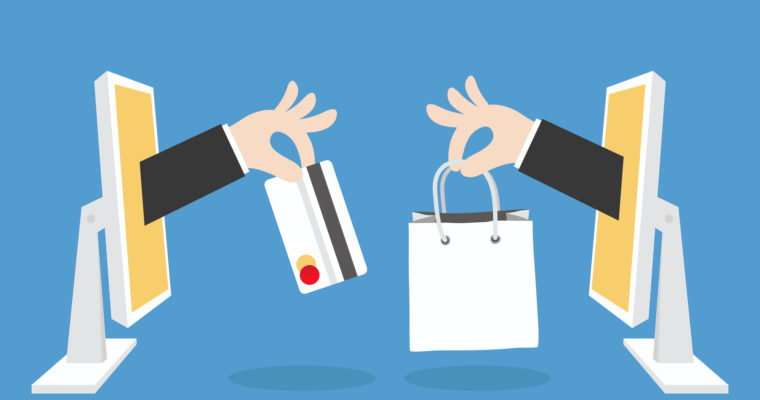
All websites are unique in their own way. We’ve seen trends in e-commerce website design like animation, 360-degree product previews, advanced filtering, and dynamic product search. However, trends don’t guarantee conversion rates or robust user experiences. There are certain elements that every e-commerce site should have to stay relevant and competitive. Here is a list of 15 must-have features that attract online shoppers.
Ease of Use
This comes from the old K.I.S.S. adage about keeping it simple. Simplicity should be a goal in good design and you don’t have to sacrifice elegance to achieve it. As a matter of fact, studies show that 76% of consumers say the most important characteristic of a website is ease of use.
The objective is to help shoppers get to what they want, faster and without running into unnecessary complexity that can clog up the path to purchase.
Online sellers have minutes, if not seconds, to make a sale. Focus on the user experience by providing shopping categories, filters, and comparison capabilities. Consider easy-to-find customer reviews and FAQ information to help buyers make decisions more quickly.
E-commerce sites should be a competitive advantage instead of a troublesome experience.
High-Resolution Photos and Video
Gone are the days of posting one photo with a few bullet points and a price tag. Shoppers want to see multiple angles and people using the product in different environments. They want to be able to zoom in and get a feel for the product.
Technical considerations for images are crucial. Images that don’t load or take too long to load will see a consumer drop-off rate of 39%, according to Adobe.
Images sell, not text. E-commerce websites should display multiple photos per product. The photos need to be high-resolution and optimized for page load.
Mobile-Friendly Website
Google declared it, so it must be done. All websites are required to have a mobile-friendly version by 2017 or suffer the SEO consequences. If this isn’t reason enough, one in three online purchases is completed on a smartphone.
With a responsive website, content intuitively adapts to whatever device is accessing it to provide the most user-friendly experience. Shockingly, many sites still have not adopted a responsive or mobile version.
User-Generated Reviews
Shoppers read reviews. About 92% of them, in fact. The star rating on a product is the number one factor used by consumers.
You might think that having negative reviews is a sale killer. The opposite is actually true. Having negative reviews can often be a positive. It’s shown that products without negative reviews are seen as censored and, in turn, shoppers will assume the positive reviews are fake.
Depending on website functionality, e-commerce sites can use plugins from the most popular review platforms including Yelp, Foursquare, and Facebook.
Forward-thinking e-commerce sites, like Paiwen paddleboards, are using reviews as user-generated content to drive social proof and build raving fans.

User-Generated Reviews
Most e-commerce sites are using special offers in their standard marketing practices via email, social, text, etc. Next-level e-commerce sites take advantage of the prime real estate in the header section to promote special offers.

When shoppers realize they’re getting a special deal, it motivates them to buy more and spend more time searching the site.
If e-commerce sites are using ongoing promotions, providing a unique webpage that lists the offers will not only drive more sales but also improve SEO. Consider the shopper searching “zip code + toyota special offers” and the value of that organic search result.

Wish Lists
Oh, how I love wish lists. One for fashion, one for books to read, one for holiday gift ideas. Shop, save, and share!
E-commerce sites that aren’t using wish lists are leaving revenue on the virtual desktop table. What’s better than having customers bookmark items they want and will most likely buy in the future? That’s just gold in the pocket. And a remarketing campaign dream.
It’s also an opportunity to share a brand with new buyers. When shoppers share their wish lists with family and friends, it sends FREE traffic with built-in social proof to a website.
Find-in-Store
Not all e-commerce sites have brick and mortar stores. However, those that do must have a find-in-store feature. Sometimes you don’t want to wait for an item to ship. Instant gratification.
Shoppers are going online just to research and then complete the purchase in person. This is especially true for millennials, as 72% of young shoppers research online before purchasing in a store.
This makes it incredibly helpful to see which local stores have products in stock.
Related Items
Simply seeing the phrase, “you might like this” causes a serotonin release signaling curiosity and excitement. A related items feature on an e-commerce site creates the desirable stickiness effect that so many marketers strive to achieve.
It happens like this. You saved the AeroPress coffee maker to your shopping cart. A section emerges that says, “you might like this”. Would you like some freshly roasted, fair trade whole coffee beans? Maybe a digital scale to measure the exact amount of coffee grounds to achieve the perfect cup of coffee? You get the picture.
When an online seller uses a related items feature to sell more, it’s actually signaling to the buyer that “they get me”.
FATJOE Link Building Service For SEO Agencies
Thinking about switching Link Building Supplier? Try the #1 Blogger Outreach Service, FATJOE. No duplicates ever, we check your link history.FIND OUT MOREADVERTISEMENT
Related items can also include similar product categories to comparison shop, “people who bought this item also searched for”, and so on.
Frequently Asked Questions (FAQ)
Complex purchases require confidence with a seller and detailed information when buying products online versus face-to-face.
At Forthea Interactive, our client, Fine Watch Bank, sells expertly crafted high-end watches. The company’s buyers need confirmation of watch authenticity and detailed product information to feel comfortable when making a purchase. An additional information section details frequently asked information, which establishes credibility and builds confidence with the buyer.
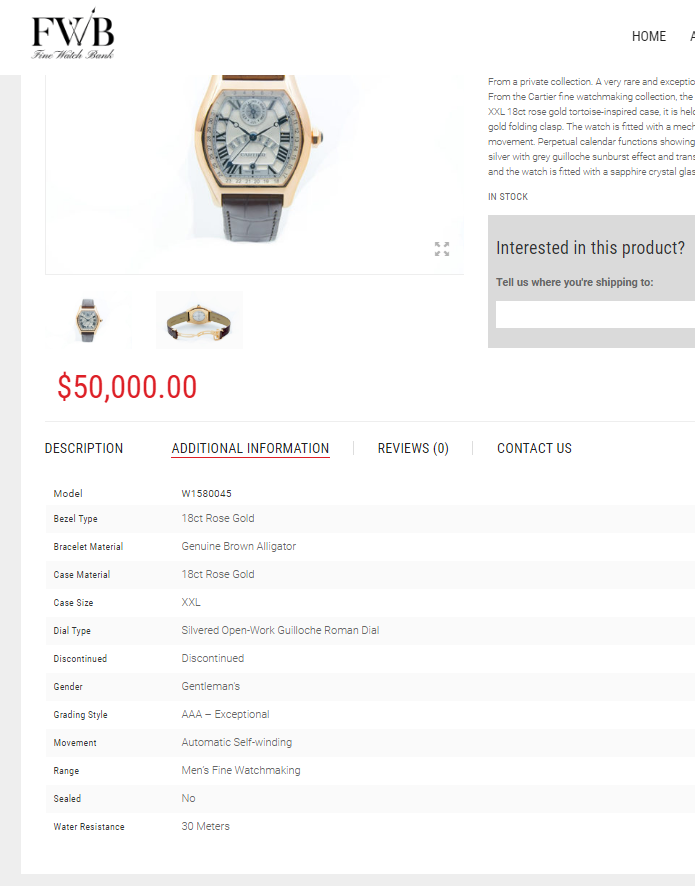
FAQ sections also provide a self-help area to address common customer problems. Buyers often ask about product support, returns, lost account passwords, etc.
Social Proof
Brands and online sellers that connect with their buyers on an emotional level create brand trust and advocacy. Social connection is undeniable and the opportunity to bond with an audience is easier now than ever. Linking social profiles and user-generated content with an e-commerce site are must-have features that will give online sellers brand character.
Shoppers are inundated with a constant flow of “buy now” and “get this”. It’s those brands that engage with customers socially that create customers for life. They are offering products that help others and that people care about.
Social media allows e-commerce brands to show authenticity and associate an emotional connection with their products. Look at Nike’s Pinterest account to see how incorporating products with motivational images makes a huge impact. See how Ikea uses user-generated content to share design ideas and inspiration for how to use its products. Check out how Lowe’s produces how-to videos that teach people how to use its products.
Security Features
Online transactions are an integral part of our lives. As such, e-commerce websites can be a lucrative target for cybercriminals. It’s crucial that online sellers protect customer information and take steps to ensure privacy.
It all starts with a secure e-commerce platform. With their sophisticated security features, it’s no wonder that Magento and WordPress paired with Woo Commerce are the top two platforms for online sellers.
Other must-have e-commerce security features to consider are:
- SSL certificate: establishes secure connectivity between a user and the website. Look for HTTPS and a green lock in the address bar before trusting an online store with your information. Select an SSL certificate vendor with name recognition. The enterprise e-commerce giants almost always use Symantec.
- Two-factor authentication: adds an extra layer of security by requiring username/password and a system-generated code sent via email or text.
- Use a firewall: provides a gateway or wall between two networks and permits authorized traffic and blocking malicious traffic.
- Privacy policy link in footer: addresses the website’s privacy policies and promises customer data is not shared with third parties.
Advanced Payment Options
In the world of Apple Pay and PayPal, advanced payment options are a must-have feature for an e-commerce site. Just consider the ease of use associated with Amazon one-click shopping. Shoppers with registered accounts can literally buy with the click of a button.
There are many popular online payment options. The key is understanding who the buyer is and implementing the most effective solutions. If a website is limiting payment options, make sure to explain why.
For example, an e-commerce site may not offer Bitcoin as a payment option after determining its value isn’t reliable. If buyers are technology-savvy individuals who tend toward this payment method, it’s important to be transparent as to why it isn’t an option. This transparency establishes that the brand understands its buyers and builds trust.
Detailed Shipping Information
Alarmingly, unexpected shipping costs are the number one reason for shopping cart abandonment. It’s critical that e-commerce websites include shipping information early in the checkout process, including a zip code calculator showing cost. It’s also helpful to include delivery time and options for faster delivery. Sites should list countries that are outside normal shipping zones.
Interestingly, shoppers spend 30% more per order when free shipping is included. Be sure to present codes for free shipping on all pages of the site through the header navigation, if applicable.

Multi-Touchpoint Contact Page
When it comes to running an e-commerce site where most business takes place online, nothing builds trust more than an overly obvious and well-presented “contact us” feature. This is especially true when selling high-end merchandise or technical products.
Never make it hard for a buyer to get in touch or request support. Consider the contact page a feature of the website. Include multiple ways to reach out, including phone, email, and an online form. Some companies with brick and mortar stores offer online appointment setting via their contact page. Be sure to add customer service social links and Google maps for locations.
Return Policy
Return policies are an essential feature of any e-commerce website. The stats below really speak for themselves, but a return policy should be clearly visible and well-written or illustrated. This is another trust-building feature of online selling. It reassures buyers that if they are unhappy or just need a different size, the brand is there for them.
A 2016 infographic and survey by Invesp shows:
- At least 30% of all products ordered online are returned.
- 92% of consumers will buy again if product return process is easy.
- 67% of shoppers check the returns page before making a purchase.
These must-have e-commerce site features could be grouped into categories like Duh, DOH! and Ahhh. Marketers and web designers might say “duh” when it comes to incorporating ease of use, high-resolution photos, security features, and contact information. As they are best practices and trademarks of good design.
There are others who would say “DOH!” when considering elements like special offers, user-generated reviews, and social sharing. They know they should be using these features but just haven’t gotten around to implementing them. It’s never too late!
Finally, the “ahhh” moment when you get excited about planning for robust related items, shareable wish lists, and find-in-store features.
No matter what category you’re in, e-commerce sites have an incredible opportunity to use tried-and-true features blended with innovative new elements to create fantastic shopping experiences.
2.3 Describe solutions available to develop e-commerce website.
Things to Consider Before Designing an eCommerce Website
You really need to size up your needs before contacting a development company. The more precise your requirements are, the better end product you’ll get.
- Mobile First – This approach is exactly as it is: designing for all the mobile devices out there (don’t forget the big ones, too).
- Product Depth – How many products are you planning to sell? 10, 50, 100? Your design and development needs will be completely different based on your business model.
- Page Type – A high converting ecommerce site will have well-designed home, category, product, checkout, and blog pages.
- Website Security – Websites, especially custom eCommerce stores, are prone to security risks. To avoid issues in the future, you need a well-written software for your online store.
- Speed and Performance – Faster websites mean higher conversions. This is why controlling your site’s content and 3rd party apps is critical.
- Product Photography – Product images can make or break your eCommerce site. Try to get product photos before you start so your development company can design around them.
- Live Chat Integration – Customers want instant answers to their questions. Make sure your design and development have this addressed. Live chat can grow sales.
What is eCommerce Website Development?
Website development, sometimes abbreviated as web dev or web development, consists of numerous tasks. These include building, customizing, and expanding websites through coding or programming certain programming languages such as CSS, JavaScript, or HTML. Once successful, web development can turn a website into an effective and powerful online business resource that grows your online sales.
Launching a profitable, fully-functional eCommerce store typically involves analysis of your eCommerce needs, formulation of a web design plan, signing up for web hosting, and scheduling launch of the final website.
What’s the Role of an eCommerce Website Developer?
The role of a developer is really product management – its up to them to bring it all together. They are responsible for integrating the user interfaces into user friendly code. They make sure all the functions are working and scripts like Google Analytics are added. They also make sure 3rd party apps and plugins are integrated. The best ones can handle apps development.
In addition to making sure every feature functions at high performance, they also work on:
- Updating database servers like MySQL
- Coding with PHP
- Other software to integrate APIs, plugins, or addons
- Handling front-end web technologies, including HTML5, CSS, AJAX, JSON, JavaScript and JS Framework
- Unit testing/API testing experience
- Creating test plans
- eCommerce data organization and relationships
- Deployment management
- Optimizing web server configurations
- Scaling web applications
- Creating custom payment forms with payment gateway integration
- Maintaining LAMP-based servers using SSH, Webmin, Plesk, and the likes
What to Look for in a Qualified eCommerce Website Developer?
There are 7 key skills that a web developer must possess:
Web Design Skills
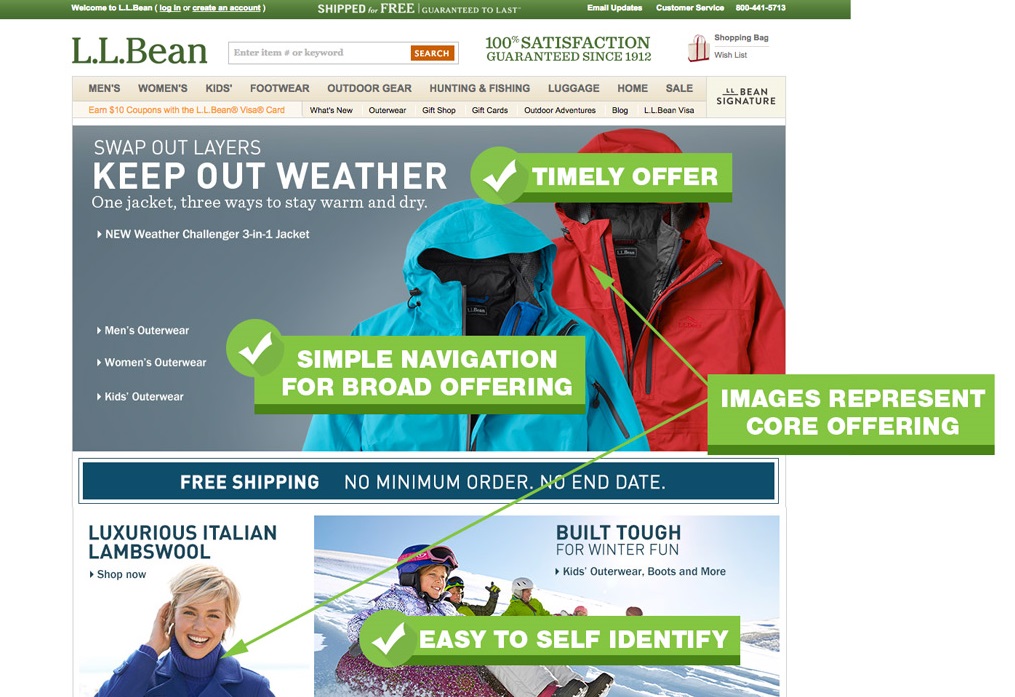
When building or redesigning an eCommerce store, a good web developer should be able to pinpoint a website’s core basics, namely flow, layout, spacing, balance/proportion, color, and contrast. These should work harmoniously together to create a result that attracts and converts customers. Done right, you’d have an effective website regardless if it’s too basic of a design.
Good Communication Skills
A web designer is usually the first person a client collaborates with. When discussing an eCommerce project, it’s essential that a designer is a good speaker and listener. The client will likely maintain a constant communication in order to establish what they really want for a website. Web development can go beyond the deepest technicalities, so if the owner is not very techie, it can be quite a challenge.
A successful web designer will ask critical questions to get all the necessary information from the client. And if possible, assess their goals and make actions according to these goals.
Problem-Solving Ability
You must have had perfect, crystal clear conversation with the client, but imperfection is inevitable. Also, there are clients who know what they want but unable to put it in exact words. A web designer’s job is to patiently fine tune the design as needed. Along the way, the website may run into technical issues in functionality, browsing, maintenance, and/or integration. An experienced developer finds the root cause by looking at multiple angles and comes up with possible development solutions.
Up-to-Date With the Latest Web Technology
Like technology, ecommerce web design trends come and go. A qualified web developer should keep up with the ins and outs of web design. To do this, they can:
- Subscribe to trusted resources such as web dev blogs and feeds.
- Read the latest published items about the industry.
- Grab connections and join a network of individuals engaged in the same industry.
- Realize that they don’t know everything and there’s always so much to learn.
HTML, CSS and JavaScript Coding Expertise

These web programming languages are the domains of a website developer. They need to gain an advanced understanding of HTML, CSS and JavaScript so they’d know what functionalities are possible and what’s not. This is to avoid design mistakes that could lead to launch delays.
PHP and MySQL Proficiency
PHP and MySQL are probably the most commonly-used web dev tools to date. The former is for creating dynamic and interactive web pages, while the latter is for managing content in the database. Having knowledge in both allows a developer to create just about any kind of website – from small contact form to huge corporate portal.
Ecommerce Business Know-How
Developing informative websites is totally different from building eCommerce stores. There are business decisions that need to be made along the road. What is the client’s preferred payment gateway? Does he prefer to use credit cards or pay cash on delivery? What is their digital marketing strategy? Do you need to set up additional third party apps? Do they know how to set up conversion optimization testing, which is critical for ecommerce business growth.
A web developer can influence and help the business to be an online success. Therefore, they should have a thorough knowledge of how eCommerce works. They should also suggest web dev steps and strategies as necessary.
How Much Does eCommerce Website Development Cost?
When it comes to development price, there’s no such thing as one size fits all. Depending on the requirements and platform used, prices start at around $14k. Expenses can add up even after the website is launched. Site performance and function need to be improved occasionally, adding extra figures to your expenditures.
Key areas that affect web development costs
Number of Products
If you have a single product ecommerce site, you obviously need a simple design. If you have thousands or more, you’d need complex design (mega menus, pagination, filtering, faceted search, category pages, etc.) to accommodate your products and the content that comes with them.
eCommerce Platform Used
Licensing costs depend on how simple or complex an eCommerce platform is. For example, a builder with more functionality costs more than a basic counterpart. Monthly SaaS platforms have limited functionality and customization. For example, on Shopify you cannot customize your checkout page design. Monthly SaaS platforms can keep their costs down by limiting functionality.
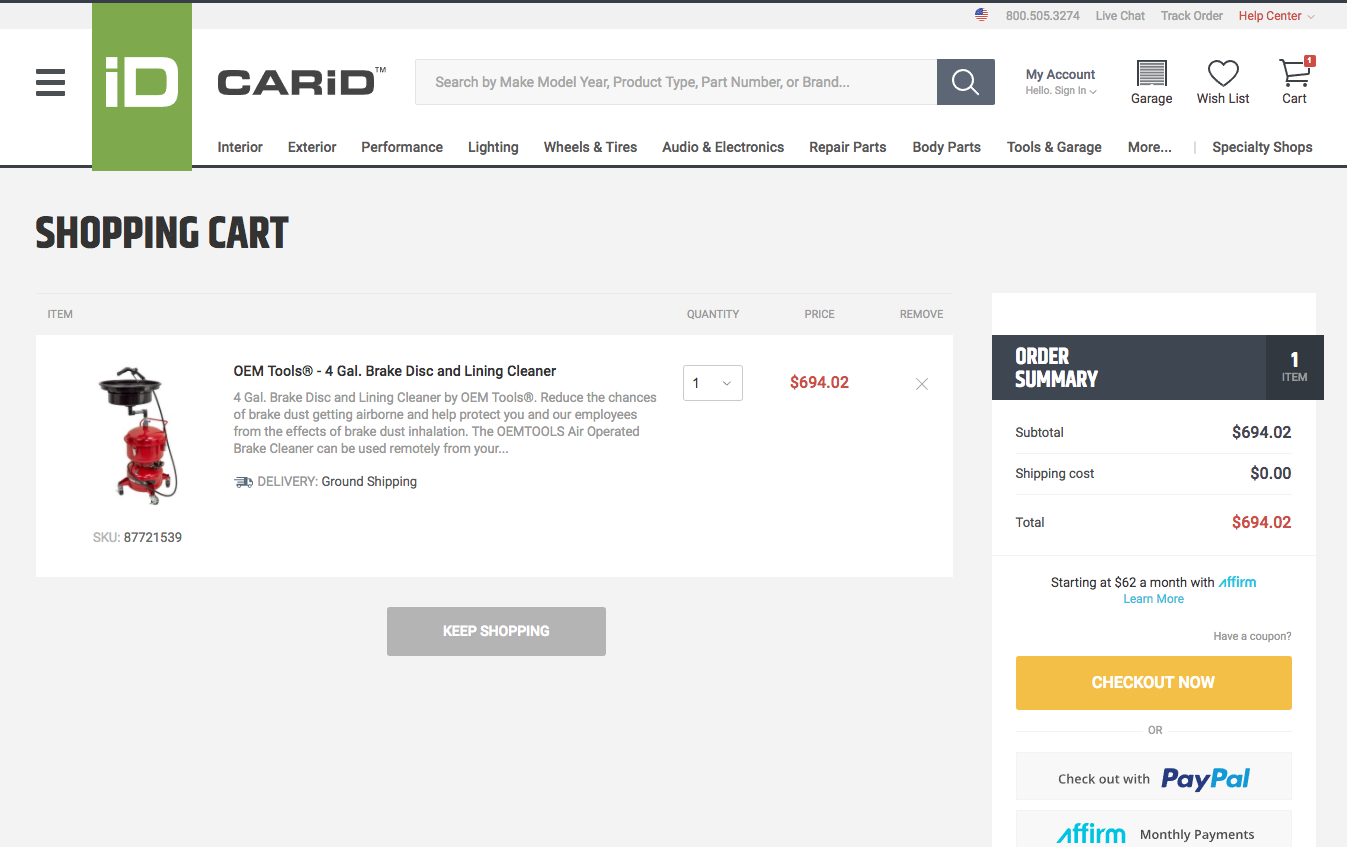
eCommerce solutions like Magento or WooCommerce are not designed to be customized by the non-techie business owner. If you go for the first one, expect about $5,000 of expenditures for setup and basic configuration.
Website Design Preferences
Most platforms, such as SaaS, have a vast collection of designs, templates, or responsive themes that you can implement on your own. By browsing around, you’d find a specific theme that matches your brand quite well. It’s actually a great idea to use these theme, since they are easy to apply and inexpensive. As a result, you get a robust responsive eCommerce website, that sets your business apart from competitors.
Custom Programming and Functionality
Top-ranking platforms provide extension or module support that can be added to your site for increased functionality. They usually come cheaper, compared when you develop the apps yourself. Make sure you check with the provider for available extensions, like CMS or ERP, before writing custom codes.
Web Hosting Plans
The typical lowest cost (if you don’t need outside assistance) for SaaS-based systems like X-Cart eCommerce Cloud Software is around $20 – $40 per month.
A wise thing to do when signing up is checking for limits in the package you’re considering. Products, storage, traffic, transactions or orders may have maximum so you want to double-check on that based on the volume you have at hand.
Hosting plans start at $14.98 per month. At this rate, you might get decent customer support and after-sales service, but probably not real PCI compliance. A successfully converting site that has moderate redundancy, scale, speed, and cloud security, you’re looking at a cost of around $1,000 to $2,000 per month.
67-Point Ecommerce Design and Development Checklist
Content
Before launching your website, it’s extremely important to double-check your content for errors diligently. Your content says a lot about your business so make sure it supports your business values well. Here’s a quick content checklist to look at to make sure your content is good to go.
- Spelling is flawless.
- Grammar issues are fixed.
- No punctuation marks are missing.
- Proper capitalization is used.
- Paragraphs align well.
- Lists are formatted well.
- Headers (H1, H2, H3) are in their rightful places.
- Formatting is not sloppy.
- Consistency in the flow is implemented.
- No repetitive words or phrases are used.
- Images/video/audio display correctly at the pages.
- The right voice/tone is used.
- Copyright details are indicated visibly on the pages.
- Links to sources are included.
- Company contact details are clearly and correctly displayed.
- Images have appropriate alt texts.
Note, that you may need a contet management system that will help you securely create, update and manage all your content types.
Design
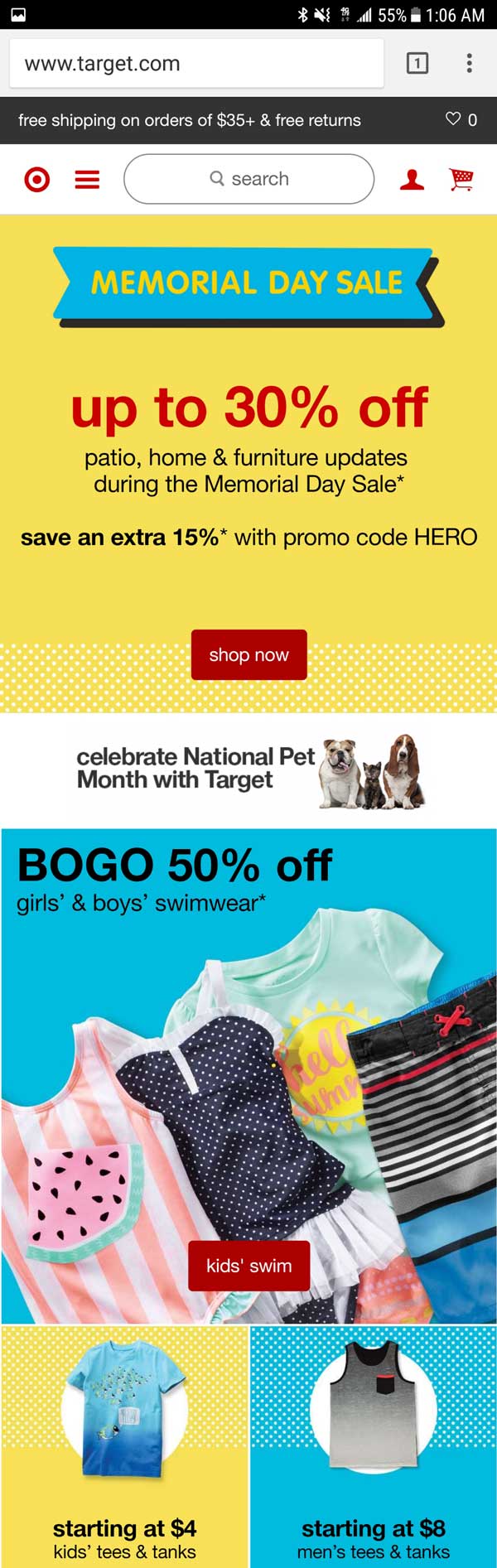
This must also be reviewed prior to site launch. Your website design should be accessible and jive well with your brand. Consider your target audience. Is your design appropriate for their age group? Also, does it display well in all types of desktops, laptops, tablets, and smartphones? A good responsive design not only looks good on any device, be it a mobile or a laptop, but fast-loading too. Here’s a list of things for you to review:
- Layout is responsive.
- Site is compatible with popular browsers.
- HTML or CSS codes are validated.
- Favicon is uploaded.
- App icons display well, especially on iOS mobile devices.
- Font choices look well together.
Functionality
There are times when forms and data stored don’t work as they should. To check for functionality, you want to take your time to look at the following:
- Forms are sending data correctly.
- Thank you page displays after hitting the “submit” button.
- Submitted data is being sent to the user’s email or phone number.
- All fields have corresponding labels.
- Links are working properly and set to “open in a new tab”.
- Social media icons are linked to correct pages and work with no problems.
- Feeds (social media, RSS, news) are displaying real-time.
- Company logo is linked to the site’s homepage.
- Pages are optimized for speed.
- 404 not found pages are created.
- Third party tools (eCommerce software, CRM, marketing extensions) is working well with the website.
- Video is functioning on all devices, you’re going to use videos, right?
Ecommerce SEO
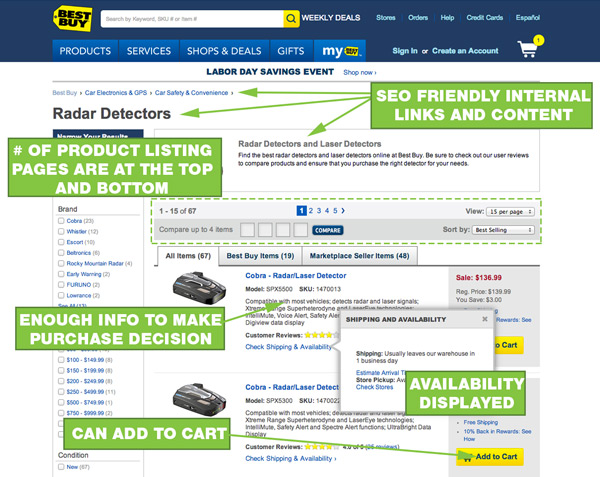
After securing your website, the next step is to make it SEO-friendly. Search engine optimization determines how customers are going to find your website (inbound marketing). You should inspect the following:
- Keyword research includes informational and commercial content.
- Pages are titled uniquely (55 words or less).
- Unique meta descriptions are added in each page (140 characters or less).
- Metadata is complete for social media sharing.
- Metadata is free from spelling and grammatical errors.
- All images have alt tags.
- Website has a dynamic XML sitemap.
- XML sitemap is submitted to major search engines.
- URLs effectively show the website’s information architecture.
- Old URLs are redirected to 301 pages or 410 deleted.
- Rel=”noindex” is added on the right pages.
Analytics
Web analytics and reporting allows you, the owner, to frequently improve your website as you go forward. You can track what you’ve built by checking:
- Website analytics code is inserted in the website’s code.
- IP addresses are excluded from tracking (as desired).
- Sales funnels and goals are set up in the analytics tool.
- Your Google Analytics and Google Webmaster account are linked together.
- Your Google Analytics and Google Adwords account are linked together.
Data Backup
Data loss is one of the most ill-fated things a website owner has to deal with. The good news is you can always prevent data loss by following a few preventative steps:
- Round-the-clock monitoring scripts are in place.
- A backup copy of the final website is secured.
- Regular backup schedules are set automatically.
- Passwords and other credentials are stored securely.
- Files are combined in an organized manner.
- HTML, Javascript, SVG, and CSS files are resized to save space.
- Image files are compressed or optimized.
- Website has a caching strategy.
- Website has been tested for loading time.
- Page resources download one at a time.
- Script execution is paused when page is downloading.
- A page enhancement strategy is installed.
Hooray! Your site is live!
Before you celebrate, here are a few important pointers to look back into:
- Your content is shared on social media.
- Your long-term goals and objectives for the website are set.
- Your content strategy has been implemented.
- Rigorous testing of automated site features is executed.
- Accurate reporting tools are integrated into the website so you’d measure its progress.
Top X-Cart Ecommerce Developers
Tough moments would make you realize that eCommerce web development is not an easy business. Design, app integration, PCI compliance, security issues, hosting – there’s just too much to deal with and it can be quite a challenge to non-tech savvy website owners. If you’re such, here’s a list of X-Cart developers that will get your site up and running in no time.
Finestshops
When the going gets tough and your website can’t seem to run out of issues, Finestshops is here to help. Revel in 100% uptime guarantee by Rackspace, 24/7 proactive store performance monitoring, X-Cart optimized PCI certified cloud server, and free security updates; all provided by this trusted X-Cart developer.
MercuryMinds
Having 10+ years of experience in setup, designing, and developing eCommerce websites, MercuryMinds Technologies well-proved that they’re the right solution for every need after developing 500 X-Cart projects to date. This developer is virtually an all-arounder, accepting projects that involve installation and template design, custom web design, maintenance, version upgrade, security patches, X-Cart module installation, rates and payment gateway configuration, and shipping methods.
CFL Systems, Inc.
This versatile developer is the ultimate solution for startups and budget-challenged online businesses. Apart from being affordable, they stand true to their job; completing each project using their own employees (no outsourcing at all). What’s more, they won’t keep you waiting for several weeks and make sure that every task is done satisfactorily.
Smack Digital
This digital web development agency has helped numerous multi-million dollar businesses to establish their presence online. You can profit from their expertise and knowledge by purchasing pre-built X-Cart modules and select X-Cart development services.
MindCrackers Solution
Based in India, Mindcrackers Solution offers highly qualitative, timely delivered and cost-effective solutions to X-Cart clients. Some of the services they excel in providing are website design, application development, search engine optimization, domain registration, web hosting and website maintenance services.
The xCart Store
Packed with professional designers and programmers, The xCart Store is dedicated to developing the best commercial X-Cart modules, templates, and services. They can help you do a lot of web dev tasks, including custom programming, module installation, template development, skin customization, x-cart hosting, store migration and X-Cart version control.
Xcart Creation
X-Cart store owners need not worry about design customization, X-Cart installation, X-Cart template design and/or integration, maintenance, X-Cart security patches, script upgrades, X-Cart module installation, search engine optimization, shipping, taxes and payment integration and other X-cart services, because Xcart Creation got it all covered.
Kosmos Central
Started in 2001, Kosmos Central has built and designed hundreds of online stores and applications that support a variety of business needs. This full-service web dev firm offers a wide range of valuable services, including web design, development, integration, and support.
NeT4gains
This India-based web developer has over 5 years of experience in developing X-Cart based eCommerce websites. Their highly competent team deals with X-Cart development, site modification, and maintenance.
Just X-Cart Australia
For over 10 years, Just X-Cart Australia has been providing perfect solutions to businesses that use X-Cart. Not only a developer, this firm is also an authorized online shopping cart reseller and Australia’s one and only X-Cart recommended hosting provider. Contact them for design, setup, training, support and other services your website needs.
Over To You
This guide clearly states that eCommerce website development requires more than just basic coding knowledge. It necessitates specialized web development strategies, especially when working on stuff like security encryption, shopping cart integration, and payment optimization. Considering these pointers in mind will guarantee that customers will get the best shopping experience and more chances of them revisiting your site.
Put Your Plans For Web Design And Development Into Action
Whether it’s a quick fix or a global omni-channel project, we’ve got all the bricks you need to build a robust online business
- Tried and true development process. Honed to perfection quality assurance procedure, carried out on our testing servers, is here to provide you with few to zero bugs.
- Seamless upgrades. Thanks to modular architecture, upgrade process is still a breeze even for heavily-customized stores.
- Close-knit team of experts. Equipped with a bundle of valuable knowledge about eCommerce development, they won’t miss your deadline or add more bugs than they have fixed.
- Flexible team and timeframes. Whether you are on a budget or a tight schedule, or both, no problem — we’ll do everything to create the pleasurable user experience.
- Comfy methods of communication. Helpdesk, email, phone, live chat, Skype, or Slack — you are the one who chooses the most comfortable place to discuss your ideas.
2.4 Explain technical considerations for e-commerce website development
Building an E-Commerce Website: 8 Technical Aspects You Need to Know
BY JUAN MARTINEZ
23 JUL 2018, 6:28 P.M.
Even though e-commerce software is plug and play, you’ll need to understand these technical features before you get started.
We review products independently, but we may earn affiliate commissions from buying links on this page. Terms of use.
Creating an e-commerce website is not a complicated endeavor. You can focus on developing solid products and promoting your brand while turning to a software company to handle the technical details—and you won’t even need an engineering degree. However, while you don’t need to be a programmer yourself, it’s important that you understand at least the basics of what your website hosting provider delivers in terms of e-commerce capabilities, and that issue remains important even after you get your e-commerce operation up and running.
I spoke with Stergios Anastasiadis, Director of Engineering at Shopify£19.99 at Shopify about the most important technology living within an e-commerce website and what you should know to get started. “We have merchants selling products out of their homes,” Anastasiadis said. “All you need is an internet connection, and any successful commerce platform should be able to run the technology on your site for you.”
First and foremost, your vendor will help you determine the look and feel of your website. It will also provide the capacity to store all of your data, and help you finalize and fulfill transactions. Those are just the most obvious obligations of an e-commerce provider. Beyond that, there’s a lot you should know about the specific tech your partner is using to ensure your website is functional, successful, and secure.
1. Website Security
You want your e-commerce website to be safe from hackers. The best websites offer 256-bit Transport Sockets Layer (TLS) encryption, allowing for an end-to-end secure connection across all of the data and transactions on your website. Websites should meet the TLS 1.2 standard and will need to upgrade a browser or operating system (OS) if they currently support TLS 1.0 or TLS 1.1. TLS has replaced Secure Sockets Layer (SSL) as the standard for communications security over a network. From the moment a person accesses your website to the moment that person leaves the website, all of the data is encrypted.
An easy way to implement this is to use Hypertext Transport Protocol Secure(HTTPS) instead of plain old HTTP to power your website. Using HTTPS combines Hypertext Markup Language (HTML) support with TLS. For any sort of online web transaction that needs privacy, HTTPS is an obvious candidate—so much so that, since January 2017, Google Chrome has flagged any non-HTTPS site asking for log-in or credit card information as “non-secure.”
Additionally, e-commerce software should provide you with a payment processing tool that can bring extra security during the cart and payment aspects of a transaction. Products such as Stripe tie in with e-commerce tools to provide Payment Card Industry Data Security Standards (PCI DSS) compliance, without requiring you to do any additional work on your end.
2. Website Performance
If a customer finds your website to be too slow or your competitor’s website to be joyously fast, then you’re likely to lose that customer. Your webpages should load in less than 100 milliseconds (ms). If the website doesn’t load in that time, then your e-commerce vendor should already be on the back end working to find a solution before you even notice.
Your e-commerce vendor will likely have technicians on staff who are constantly tracking page load times by using website monitoring tools to ensure your website is operating at peak levels. If the webpages struggle for any reason, then the staff is usually automatically alerted by email or phone that a problem has occurred. Keep in mind: These load times are true across mobile and web, so make sure to keep track of how your website is loading across multiple devices.
3. Scale According to Your Needs
E-commerce services have varying needs for resources depending on the size and load of a store. You’ll want to quickly and easily scale your website depending on what happens to your load times as traffic to your page increases.
When your inventory grows quickly or you need to support heavy load activities, such as Flash sales and seasonal deals, you’ll need to scale your platform accordingly to handle these needs or risk customers becoming frustrated with your site’s performance and clicking over to another store. Monitor traffic and peak user load times to avoid crashes and scale server resources accordingly.
Fortunately, scaling server needs is easy as long as you or your e-commerce site provider is using a cloud provider that’s standardized on a reliable Infrastructure-as-a-Service (IaaS) platform. Using such a platform, you’ll be able to scale your server power to your heart’s content with just a few mouse clicks. Even better, you’ll only pay for this added muscle for as long as you’re using it, unlike working with physical servers where unused power simply goes dark while costing you the same.
4. Think Mobile First
These days, most e-commerce services help you build out your website on the mobile web before they ever think about a desktop. That’s because most content that works on mobile will also render just fine on desktop but not vice versa.
“With consumers shopping on mobile more than ever before, optimizing e-commerce websites for mobile is critical,” Anastasiadis said. “From a technical perspective, features that are built with a mobile-first interface can provide merchants with more flexibility and scale.”
If you talk to a prospective vendor and it tells you that its developing “web-first” and converting to mobile later, then you probably want to walk away. Regardless of other factors that make the company attractive, such an outdated philosophy will put your website at a disadvantage from the start.
5. Cloud Hosting
Your service provider will likely be storing your data in the cloud using big-name providers, such as Amazon, Google, or Microsoft. Find out which service you prefer by researching factors such as backup, disaster recovery (DR), security, and uptime.
If you manage a service yourself, then Amazon, Google, and Microsoft are all very good options, but you may have a preference between the three or even with a different vendor. Picking one of these is critically important as it will be the one responsible for how often your website goes down, whether or not your stored data is safe, and even if you’ll be able to access it again if a disaster occurs.
6. Website Updates
Your website isn’t a “set-it-and-forget-it” proposition. You’ll want a vendor that can consistently deliver new code to your website for performance improvements or new features. Unfortunately, some vendors only ship new code once a day or even once every couple of days. You want a vendor that can provide code at any point in the day. This way, you’ll never have to wait for problems to be fixed or for shiny new features to go live on your homepage.
However, you’ll also want accurate reporting of when these code updates go live, especially if they don’t directly concern the front end of your website but are more related to the back-end operations relevant to the provider. Those kinds of features usually roll out just fine, but there’s always a chance they could break something on your page, too. You want to know exactly when those updates are happening, preferably with a testing window beforehand. However, if that isn’t an option, then you certainly want an accurate deployment schedule so you can do site testing yourself as soon as new code goes live.
7. Data Engineering
Ask your prospective e-commerce vendor if it has a dedicated data engineering team on staff who can help you build custom reports about your website’s performance. This analysis will help you determine if products are properly placed, if people are abandoning cart too frequently, or if you need a total rethink regarding website navigation.
Sure, most vendors offer out-of-the-box reporting, but if your vendor doesn’t have a team available to build custom reports for you, then you’ll need to work with a third party to perform this function when it becomes necessary. That’s going to cost extra money and add undue hassle for you. The good news is that most companies offer this service in one form or another, and they’re constantly updating the tools that surface the analytics.
This capability is also helpful when you start analyzing your site’s stats using business intelligence (BI) tools such as Tableau Desktop. Using a BI tool is a necessity once you require deeper insights into how your customers are behaving on your website, what products or services they’re choosing or rejecting, and similar knowledge points. Make sure your provider can help you gather the transactional data necessary to perform this kind of analysis. In addition, customize a data warehousing option in your platform to gain more insights. Services such as Shopify offer a fully managed data warehouse for larger merchants in addition to standardized reporting products.
8. Third-Party Integrations
Although you might be a tech neophyte, you probably already use a wide variety of software to run your business. The ability to connect all of your tools is crucial for streamlining workflows and optimizing data intelligence. For example, if you run email marketing campaigns through MailChimp, then combining your marketing and e-commerce platforms ensures that “Thank You” and promotional emails are tied directly back to the website. This allows for greater oversight about who bought what, which promotions worked, and whether or not you can reclaim customers who have abandoned a shopping cart.
Finally, find an e-commerce provider that offers native integrations with as many third-party tools as possible. The more native integrations, the more options you’ll have when it comes to expanding your toolset.2.5 Describe features of technology that support secure management of data.
5 Ways to Enhance Data Security
The world of cybersecurity is progressing at a huge speed and in at the same time, improvements in technologies are becoming increasingly better at assisting the hackers and cyber-criminals to exploit data security loopholes. The constant increasing graph of cybersecurity attacks are a major concern for internet users and business organizations. And they should be!
One recent example of the growing scale of such attacks is the recent ransomware attack known as WannaCry. It was one of the largest attacks in recent years affecting a large number of businesses all over the world. Here’s where the question arises; ‘why have both large and small businesses been affected and influenced by this attack?’. It seems like the world is starting to see that increased security measures are not just a matter of protecting data, but in protecting data, we are protecting the very infrastructure of our business.
There are many ways organizations can protect their business from cyber-attacks. The article is from a PrivacyEnd post which outlines several measures including; updated software, improved technologies, skilled employees and pre-planned precautionary measures.
I have extracted the five suggestions from the PrivacyEnd article that I wish to explore in more depth to provide you with recommendations and tips for enhancing your organization’s data security.
Limit Data Access
Most of the organizations give privileged access to their sensitive data to a number of employees and insiders. Think about who in your organization has access to sensitive customer data? Can you identify everyone’s access rights? Most company executives are unaware of the details about individual employees who have access to data and why they access it. This is a huge risk to data loss, theft and hacking.
This means it is necessary for businesses to limit the data access. Organization’s should determine what an employee needs access to and ensure they have access to only what they need. Not anything else. These all limitations could help organizations to manage their data more efficiently and ensure it is being safeguarded from theft or loss.
According to Dircks, Bomgar CEO,
With the continuation of high-profile data breaches, many of which were caused by compromised privileged access and credentials, it’s crucial that organizations control, manage, and monitor privileged access to their networks to mitigate that risk. The findings of this report tell us that many companies can’t adequately manage the risk related to privileged access. Insider breaches, whether malicious or unintentional, have the potential to go undetected for weeks, months, or even years – causing devastating damage to a company.
Identify Sensitive Data
For companies, it is really important to be aware of where their most important data and sensitive business information lies. This will ensure you have the right information and allocate more resources to protecting your most sensitive and crucial assets.
Although sensitive business data is only probably around 5-10% of your total business data, a data compromise involving sensitive or personal data could result in an immense loss of reputation and revenue to a company. If we go back to access management and rights, we should be putting more strict measures on sensitive data over other business data.
Pre-Planned Data Security Policy
When looking at the operations and processes needed to mitigate a cyber-attack, an important step is to prepare a list of security measures and data security policies. This sort of plan by an organizations could help significantly in critical situation and times of incident response. Through policies, you can immediately react in order to prevent extreme impacts of a cyber-attack.
As with access management and rights, employee access could be identified easily and you would remain aware of which users in your organization could have potentially been breached. It’s important to remember that a policy and process plan is only as good as it’s last revision. Technology, industry regulation and best practice is always changing. Someone therefore needs to own this policy and process guide and always look at new ways of updating it to keep it relevant.
Strong and Different Passwords for Every Department
Sensitive data in an organization should be locked away with strong passwords. Making stronger passwords is necessary for fighting a number of password hacking tools that are easy to get on the market. Try ensuring that there are a combination of different characters including alphabets, numbers, symbols and other capital letters.
Additionally, using the same passwords for different programs and access is also a risk. Once your password is cracked, a hacker will try the same password on all major accounts you own.
Therefore, organizations should keep unique passwords for all employees as well as the departments. This can be easily managed using a password manager tool and ensuring that all employees receive proper data security training and password tips.
Where possible, it is also advised that multi-factor authentication is used. Adding another step to a password login means another step that hackers need to crack, making the hack much more unlikely and difficult. Some good examples of multi-factor authentication include biometrics, push notifications to phones, smartcards and token authentication.
Regular Data Backup and Update
Last on the list of important data security measures is having regular security checks and data backups. For an unexpected attack or data breach, it is really helpful to have an organization back up their data. To have a successful business, you must keep a habit of automatic or manual data backup on a weekly or daily basis.
In addition, the data should be protected through updated software and efficient antivirus tools. However, to attain this, you must have progressive and efficient IT department. Make sure you are hiring someone with the right skills who you can trust to do the job properly.
Conclusion
Becoming a successful business is a difficult task, but sustaining yourself is much more challenging. In today’s world of immense cybersecurity risks it is really important for you to be pre-equipped with the security tools and privacy enhancements that are needed to safeguard your most valuable asset – your data.amatoantonioSenza categoriaLascia un commento14 marzo 2019 33 Minutes
Bamboo solution




Miswak is a teeth cleaning chewing stick from the tree of Salvadora persica. The stick, which is available everywhere, has antibacterial properties and can be used instead of toothbrush and toothpaste. It prevents dental plaque formations and associated with multiple medicinal benefits and uses.





 Digital Marketing Level 4